
Table of Contents
Opening the problem—why commercial and industrial sites still struggle
Factories, data centers, and large retailers face a repeating set of problems: volatile grid pricing, intermittent renewables, and the growing need for backup power during extreme weather. Many teams know a battery can help, but integration friction—control gaps, slow response, and limited export capability—still stops projects from delivering full value. That’s changing as modern power electronics mature and bi‑directional inverters become mainstream. If you’re evaluating a solar battery storage deployment, understanding these pieces in plain terms is the fastest way to avoid costly surprises.

The concrete bottlenecks: speed, flexibility, and economic stacking
At the core are three constraints. First, response speed: older inverters and controllers aren’t fast enough for frequency response or tight peak shaving. Second, export and grid interaction: many systems were designed for import-only, so they can’t discharge back to the grid or run in island mode when needed. Third, stacking revenue streams—time-of-use arbitrage, demand charge reduction, and capacity markets—requires precise controls and reliable telemetry. When those constraints exist, the battery becomes an insurance policy, not a profit center.
What modern power electronics actually change
Modern power electronics bring higher switching frequencies, smarter control loops, and digital communications that let systems act like agile assets rather than passive loads. You get faster transient response, higher round‑trip efficiency, and improved thermal stability. Those gains reduce usable energy loss during cycles and let onsite systems support grid services like frequency regulation. Add standardized communications and you can aggregate fleets for market participation without bespoke, error-prone integrations.

Why bi‑directional inverters are the multiplier
Bi‑directional inverters let energy flow both ways—charge from the grid or solar and discharge back to support site loads or the distribution network. That enables features like peak shaving, islanding for resilience, and vehicle‑to‑grid scenarios where export matters. In short: they convert a storage asset into both a defensive and a commercial tool. From a controls perspective, having grid‑forming capability in an inverter can even let a battery take the lead during a blackout, stabilizing voltage and frequency for critical loads.
Real-world anchor: lessons from blackouts and price spikes
Look at the February 2021 winter storm in Texas: millions of customers lost power and many commercial operations suffered long downtime. Events like that make the difference between a theoretical ROI and a solved business continuity problem. Operators who had flexible, island-capable systems restored critical loads faster and avoided catastrophic losses. You don’t need every disaster to be a system test—plan for the credible ones and design controls that can pivot between economic dispatch and resilience priorities.
Implementation pitfalls to avoid
Common mistakes are predictable. Teams pick inverters without checking grid-forming capability, assume vendor telemetry will play nicely with their EMS, or buy systems sized purely on energy rather than power demands. Don’t underspec the inverter’s continuous and surge ratings relative to your critical loads. And test with the real load profile—simulated data misleads. —Also, don’t forget firmware: field updates can change operational behavior and should be contractually managed.
Comparing architectures: AC‑coupled vs DC‑coupled trade-offs
There’s no one-size-fits-all. AC‑coupled systems ease retrofit and let multiple inverters work in parallel, while DC‑coupled setups are often more efficient when paired tightly with PV for charging. If your site maximizes solar self-consumption, DC coupling boosts yield. If you value modularity and phased upgrades, AC coupling wins. Either way, choose a topology that aligns with your control strategy and market goals—be explicit about the inverter’s role in that plan.
Common vendor selection mistakes and how to avoid them
Vendors often sound similar on specs, but subtle differences matter: control latency, protocol support (Modbus, SunSpec, OpenADR), warranty structure, and firmware governance. Don’t sign until you’ve validated real-world performance with site-level tests. Also verify that the system supports the market-facing functions you want—demand response, bulk export, or islanding—with documented test results.
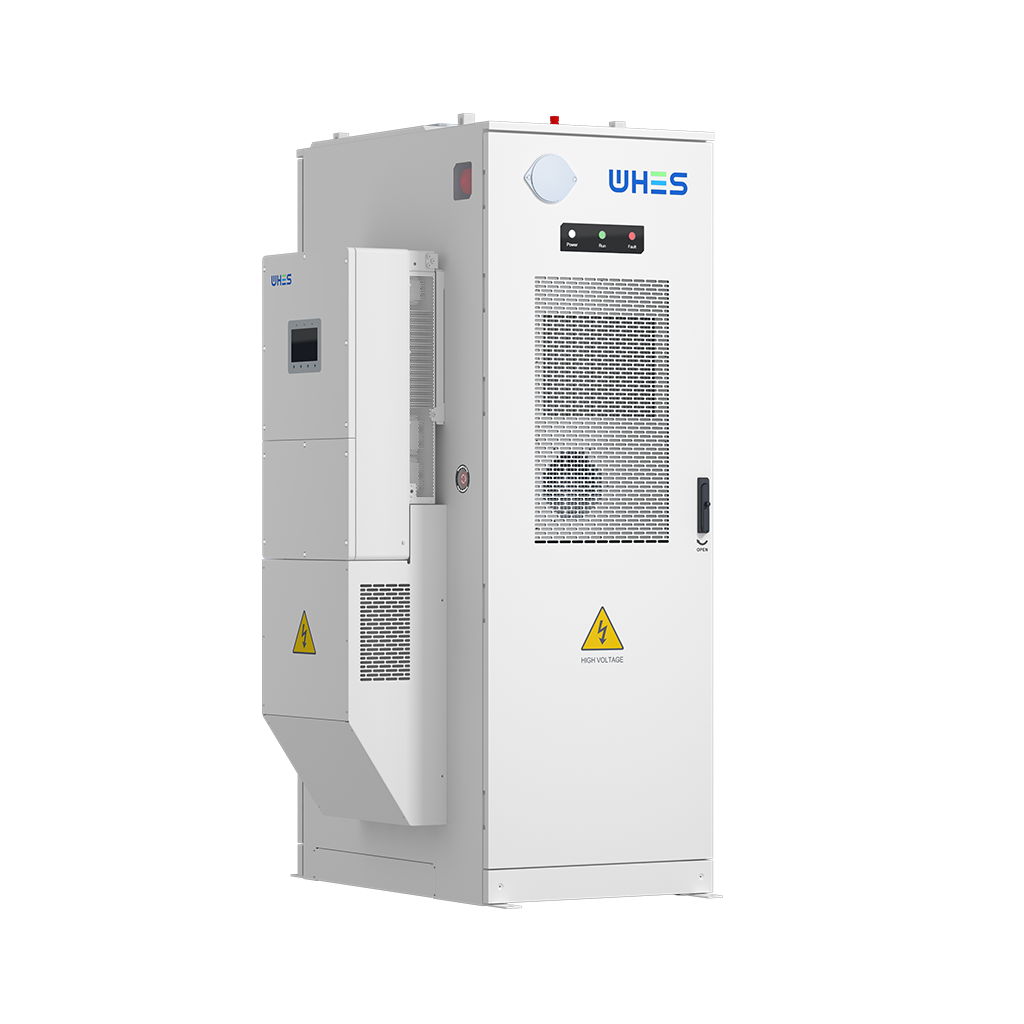
Advisory: three critical metrics to judge any system
1) Round‑trip efficiency and usable capacity: measure expected delivered kWh per cycle, not just nameplate. This determines practical revenue from arbitrage and services. 2) Control and grid compatibility: verify grid‑forming ability, supported protocols, and latency for fast market signals—these decide whether your system can participate in ancillary services. 3) Power rating vs. duty cycle: compare continuous and surge inverter ratings against your peak and transient loads to avoid oversizing batteries for the wrong reason.
When you apply those metrics, the technical value of modern power electronics and bi‑directional inverters becomes a business case—not just a checklist item. For teams moving from pilots to fleet deployments, practical integrations with reliable product roadmaps and service terms separate long-term winners from costly experiments. In most commercial scenarios, a supplier that couples robust controls with clear performance guarantees will speed time-to-value, which is exactly what you want when resilience and economics both matter. WHES. –