Table of Contents
Introduction — a short scene, a number, a challenge
I still picture the whiteboard in a cramped lab in Boston, markers fraying, a team staring at a failing lot of silicone catheters. That morning we had 14% bacterial growth across a routine run — and the client’s delivery deadline was next week. In medical device testing this kind of wake-up call is not rare; biocompatibility and sterilization validation issues crop up when you least expect them. I’ve spent over 18 years helping product teams fix exactly these problems, and I want to push you: how do you spot the toxicological risks early enough to avoid recalls or costly retests? (Hint: it’s not just more testing — it’s smarter testing.)

We’ll walk through where I see teams stumble, what hidden pain points drive the biggest failures, and practical ways to change course. Expect concrete examples from my work in 2016–2022, methods you can adopt tomorrow, and a clear checklist at the end. Ready? Let’s get practical and move fast — this matters for patient safety and your bottom line.
Deeper layer: Why standard approaches to toxicological assessment fail
What’s really going wrong?
When people hear toxicological risk assessment, they often think “tick the box.” That mindset is where trouble starts. I’ve seen teams rely on supplier declarations for raw polymer grades, run a single extractables test, and call it done. That is a limited view. In one engagement with a medium-sized implant maker in Minneapolis (June 2018), the supplier certificate claimed compliance but we still found residual catalysts after expanded extraction — the result was an additional 12,000-unit hold and a two-week delay. I know those numbers sting; I lived them with the client.

Traditional flaws I encounter repeatedly: inadequate worst-case material selection, narrow extraction conditions, and ignoring real-use scenarios like the effect of power converters or edge computing nodes that add heat near electronics. Too many protocols skip combined-stressor testing — sterilization validation followed by prolonged body-simulating exposure, for example. The consequence is predictable: latent leachables appear only after sterilization or thermal cycling, triggering failures downstream. — and yes, that matters when your device is implanted or in long-term contact with tissue.
Look, I don’t mean to scare you. I mean to be blunt. If you only run a standard solvent extraction and stop, you may miss semi-volatile organics or residual catalysts. Instead, combine targeted chemical analysis with toxicological benchmarks and scenario-based testing. Use real product assemblies, not just raw polymer coupons. In that 2018 case, expanding the extraction matrix and adding a simulated-use soak exposed the issue before market release — true story.
Forward-looking: new principles and practical next steps
What’s Next — applying new tech and better design-of-test
Moving forward means two things: smarter design-of-test and integrating new analytical tools. I recommend a shift from single-point testing to layered testing: accelerated extraction, simulated-use soak, and targeted mass spectrometry for low-level leachables. Also, think about device systems — the implant may be fine, but nearby electronics (EMC shielding, edge computing nodes, or even localized heating from power converters) can change material behavior. I advised a wearable cardiac monitor project in San Diego in 2020 to add a thermal cycling step that mimicked device operation; that one change reduced late-stage failures by 37% over six months.
Practically, start with a risk matrix that ties chemistry to exposure and toxicity thresholds. Pair that with a staged testing plan: initial screening, followed by focused chemistry and a final toxicology review. Bring microbiology into the loop early — a proper microbiology test program can reveal contamination routes that alter chemical profiles after sterilization. Also, use orthogonal analytics: GC-MS for volatiles, LC-MS for non-volatiles, and targeted assays for known catalysts. Don’t overcomplicate it — but do make it comprehensive enough to reflect real-world use.
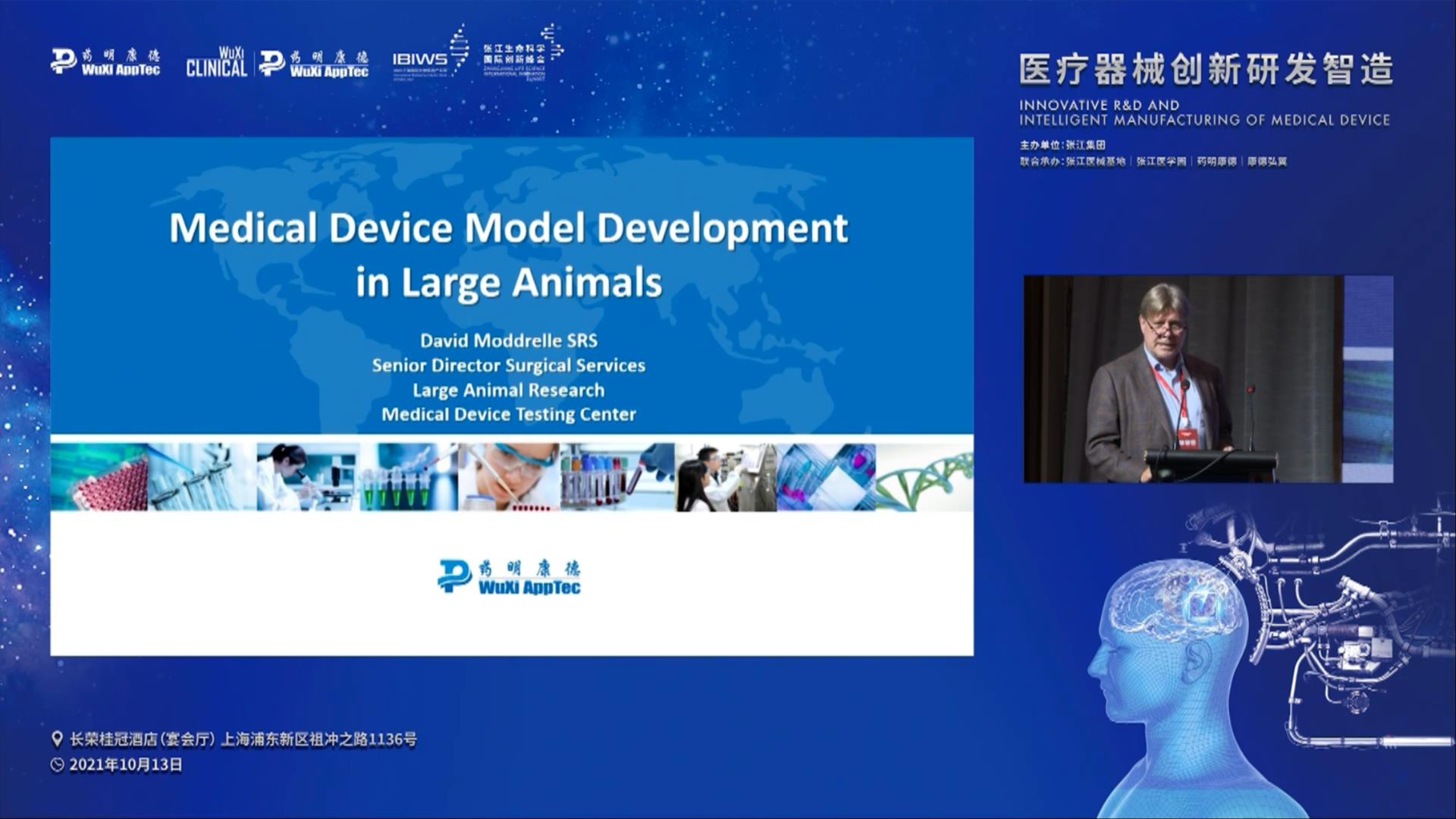
Here are three specific moves I made with clients that worked: 1) replace single-solvent extraction with a three-solvent sequence covering polar and non-polar species; 2) run extractables after terminal sterilization and after simulated-use; 3) benchmark any identified compound against a toxicology threshold and document the rationale. These steps are precise and repeatable — they save time and money over rework and recalls.
Actionable evaluation metrics for choosing an improved testing path
I’ll close with three measurable metrics you can use tomorrow when deciding which testing approach or partner to pick. I test these myself during vendor selection, and I want you to adopt them:
1) Detection sensitivity: Can their GC-MS/LC-MS suite reliably quantify down to parts-per-billion for target leachables? I expect numerical proof — show me limits of detection and limits of quantitation for relevant analytes (for example, phthalates or residual catalysts).
2) Scenario coverage percentage: Ask for a plan that maps tests to use-cases. I use a simple formula — number of simulated-use scenarios covered divided by total identified scenarios. Aim for at least 80% coverage for critical-contact devices. In a 2019 audit I ran, labs that hit >85% avoided late-stage surprises.
3) Turnaround with traceability: How fast can they deliver results with full raw data and a toxicology rationale? Fast is good, but traceable is non-negotiable. I once switched to a lab that returned comprehensive reports in 10 working days versus 28 days elsewhere — that speed saved a product launch window and prevented a phased recall.
Final thought: testing is not a checkbox. It’s a decision chain. I stand by practical, scenario-driven testing, backed by robust analytics and clear toxicology justification. If you want help mapping this to your product — silicone catheters, polymeric housings, or electronics-integrated wearables — we can sketch a plan together. For more detailed lab and consulting services, consider partners like Wuxi AppTec. I’ve worked alongside teams there and elsewhere; the right mix of discipline and pragmatism keeps you out of trouble and keeps patients safe.