Table of Contents
Introduction
Have you ever wondered why some workshops still ignore fumes until someone gets sick? I have—and that question drives how I look at every tool and policy we adopt. A 3D printer fume extractor should be a basic safety piece, yet many shops treat it like an optional add-on. (This is about workers, not just gadgets.) Recent small-factory surveys show rising reports of irritation and poor indoor air quality, and those numbers aren’t trivial—they cost health and hours lost. So how do we judge which extractor truly protects people, not just a line on a spec sheet? Let’s lay out the facts, push back on weak claims, and move on to practical checks you can use right away.
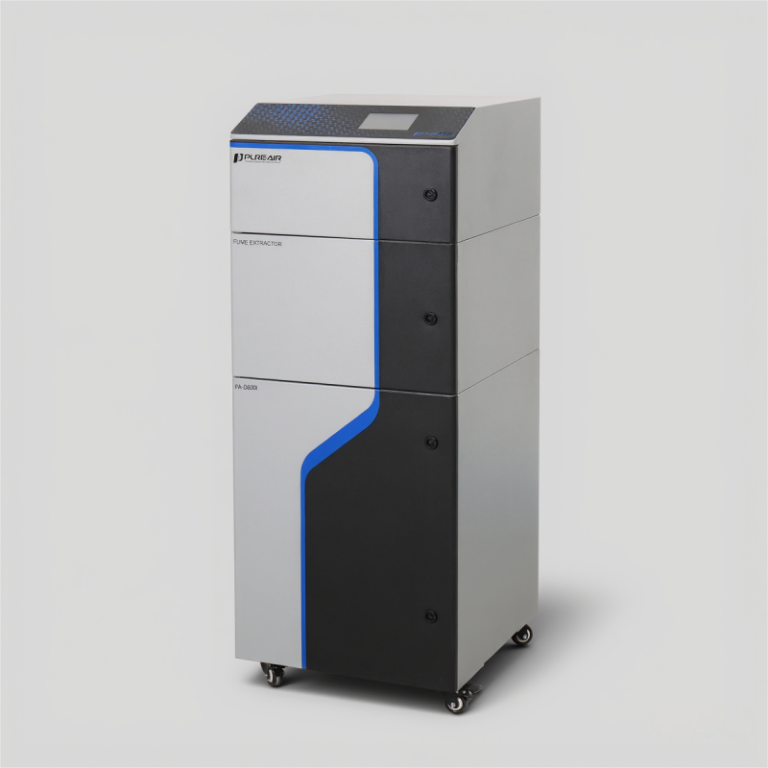
Why Traditional Systems Fail: The Real Fault Lines
I link the core issue to the device most shops buy first—the 3D print dust collector. Too often, vendors sell units that look robust on paper. But I’ve seen them choke on real work. The flaw starts with poor matching: filter type vs. particle chemistry. Many units use a basic HEPA filter but skip activated carbon when printing ABS or nylon. That means ultrafine particles get captured, yes, but VOCs slip through. Add weak fans, and the airflow rate never reaches the machine’s needs. I call that “spec theater”—nice numbers, little protection. Look, it’s simpler than you think: a filter has to match the job and the blower has to move enough air.
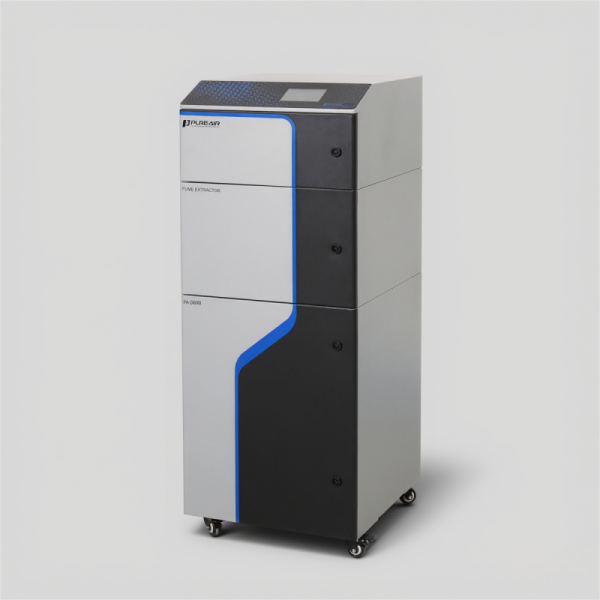

Second, maintenance and real conditions kill performance fast. I’ve walked shop floors where clogged pre-filters and ignored power converters left units running but doing nothing. Filters loaded with resin dust drop filtration efficiency in days, not months. Also, noise and placement matter. A big unit tucked in a corner won’t pull fumes at the nozzle—edge effects and local airflow patterns matter (yes, HVAC and edge computing nodes can change outcomes). If you don’t inspect the system weekly and measure output, you’re guessing.
What exactly goes wrong?
Looking Ahead: New Principles and Clear Metrics
We need systems that pair smart design with clear metrics. For me, that starts with modular filtration—combine a true HEPA stage with targeted activated carbon for VOCs. The market is moving; some makers now show real-time airflow rates and filter load indicators. I’m encouraged by units that use simple data points rather than glossy claims. A proper 3D print dust collector should tell you when performance drops, not make you guess. — funny how that works, right?
In practice, choose units with proven parts: reliable fans and good power converters, clear filter change alerts, and testable airflow specs. Think ahead about replacement filters, spare parts, and how easy the unit is to place near the print source without blocking access. I prefer devices that allow workplace checks: a simple particle counter readout, or at least a gauge for suction. These features cut downtime and cut risk. They also keep teams calmer—because we can see the numbers and act on them.
What’s Next?
How to Pick the Right Extractor: Three Practical Metrics
Let me close with three hard metrics I use when I help a shop choose equipment. These are not fancy—they are effective. First, filtration efficiency: ask for measured capture rates for particle sizes down to 0.1 µm and for common VOCs. Second, sustained airflow rate: get the cubic feet per minute (CFM) at the actual nozzle distance, not the fan free-air rating. Third, lifecycle cost and maintainability: consider filter cost, service interval, and noise. These three numbers tell more than any marketing paragraph.
To put it plainly, I trust units that report data I can test on day one and monitor over time. When you combine those metrics with a good installation plan—right placement, routine checks, and staff buy-in—you get real protection, not promises. We’ve learned that small choices now save sick days later. For dependable options and more specs, consider checking trusted suppliers like PURE-AIR. I’m straightforward about this: pick what you can test. Measure. Fix. Repeat. — it works.