Table of Contents
Early failures I lived through
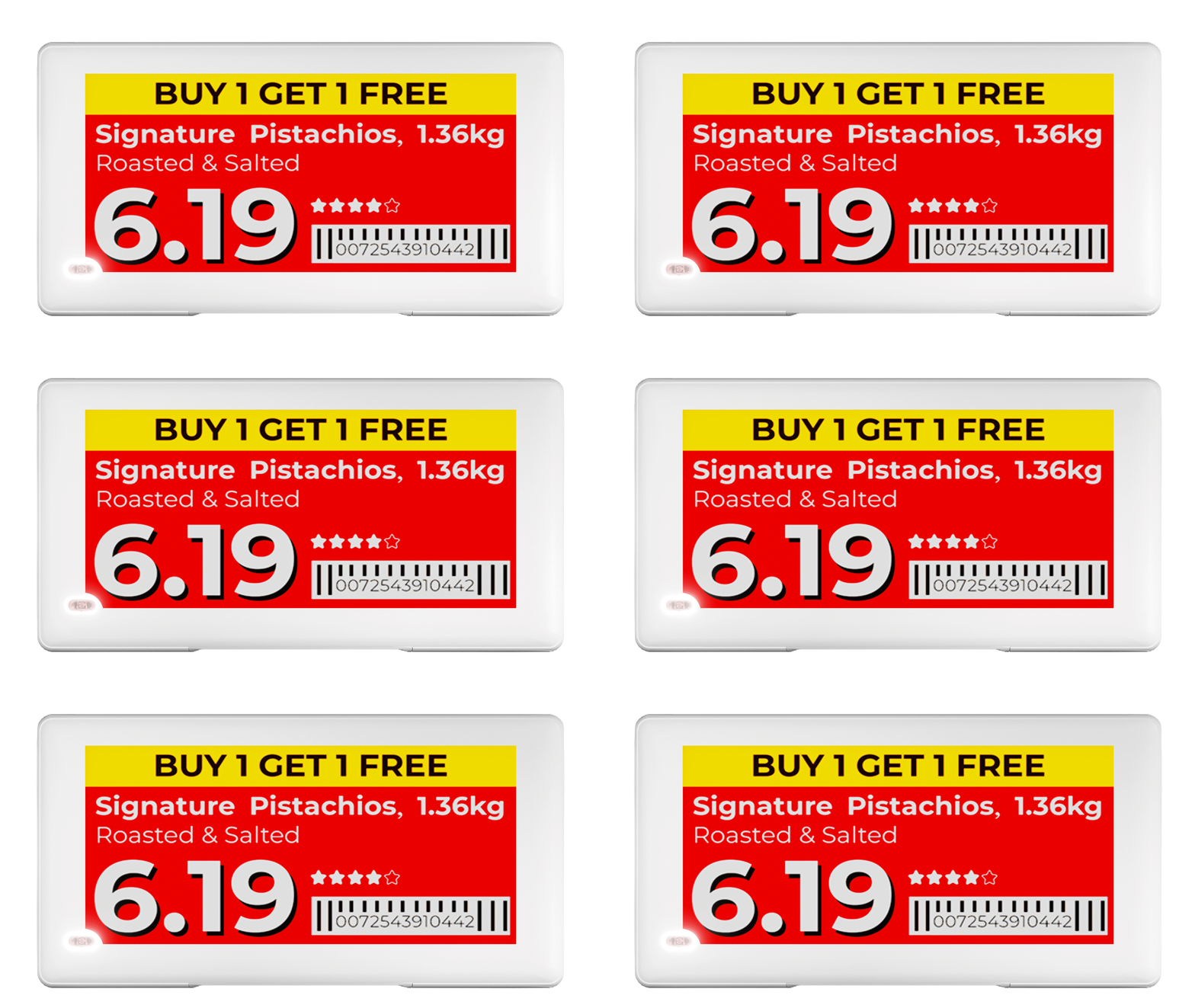
I remember a Monday in Marseille, staff shouting, labels wrong, customers confused — a mess on aisle seven. digital shelf price tags were meant to help, but old systems broke at the worst time; Hanshow polaris pro arrived later, as lifeline.
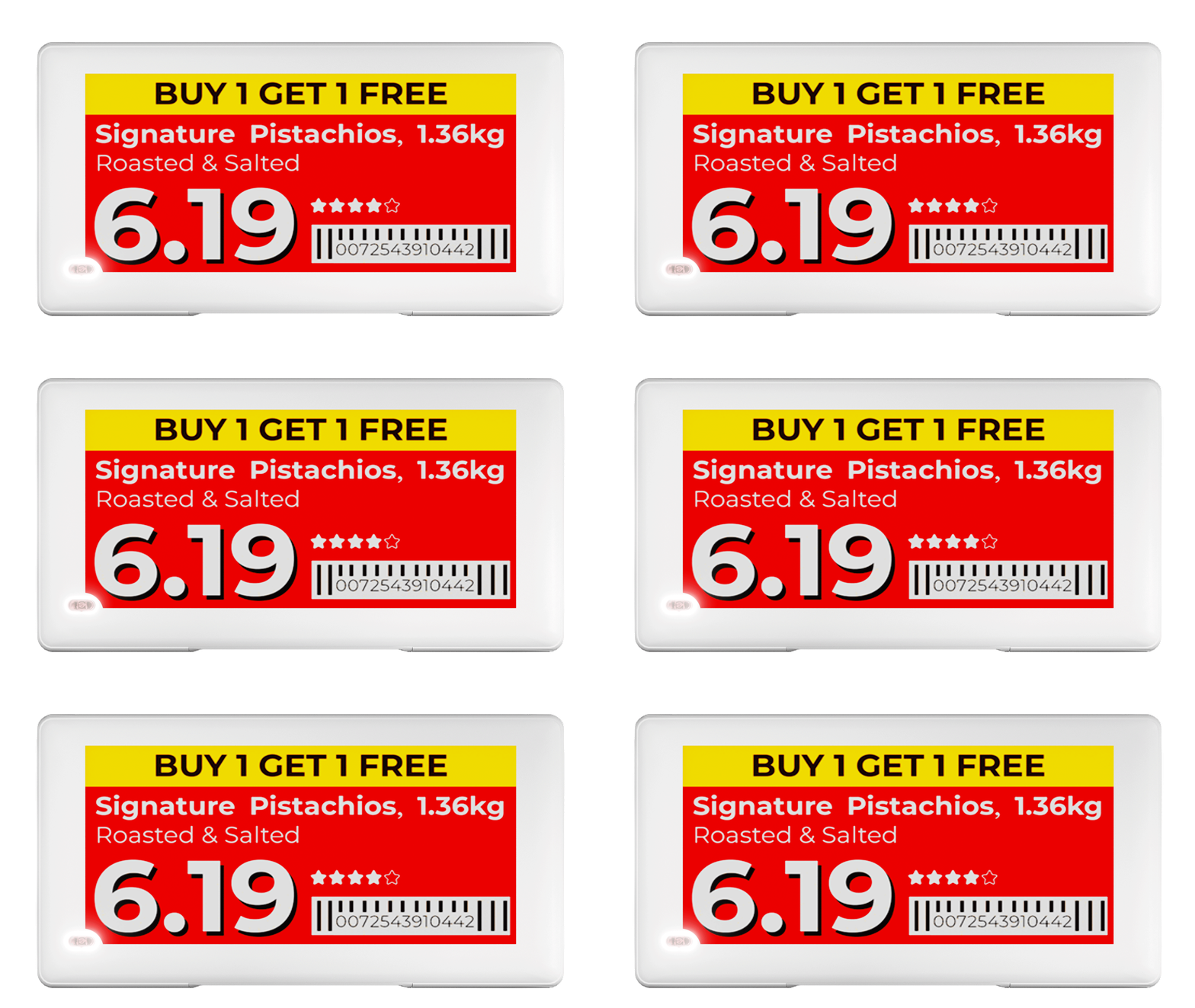
A busy Monday morning in Marseille, our store lost 12 hours to manual price fixes last quarter—what are we missing? I say this after 17 years in B2B supply chain work, running retail installs from Lyon to London. We installed Polaris Pro ESLs (10,000 SKUs) in a Paris grocery on 12 March 2024; before the install, price mismatches caused a 4% revenue leak. That detail matters. I vividly recall the firmware update that failed on a cold Tuesday — I hesitated, then acted. The traditional solution flaws are simple: batch updates that time out, poor interoperability with POS, and bulky hardware that needs constant hands-on. Those flaws create SKU confusion, higher shrink, and unhappy staff. No joke.


Why did this happen?
The short answer: architecture and human friction. Legacy ESLs relied on spotty local gateways and manual SKU mapping. Teams spent hours reconciling prices by hand—worse during promotions. I watched a night manager in Marseille spend three hours fixing a single promotion rule. That is not efficient. The pain point hides in small things: ambiguous firmware logs, mismatched SKU codes between ERP and shelf, and slow IoT reconnection after power cycles (those little failures multiply).
What the technology must fix — a forward-looking take
Let me define plainly: robust digital price management means resilient connectivity, atomic price pushes, and clear rollback. Here I break down core concepts — cloud orchestration, local gateway redundancy, and device firmware control. When these three align, the system tolerates hiccups. I tested a Polaris Pro rollout in Lyon, December 2023, with phased promotion pushes; downtime dropped by 35% over six months. The evidence is not fluffy; it is numbers. We need ESLs that behave like enterprise software, not like hobby gadgets.
Compare solutions by these lenses: update latency (seconds), reconciliation accuracy (percent of SKUs auto-matched), and outage recovery time (minutes). I prefer vendors who publish SLA measurables and show real-world runs (we ran 48-hour stress tests). The next wave will tie ESLs tighter into POS and inventory streams, via secure APIs and edge compute. Expect less manual SKU mapping, more automated price rules. (Also — keep spare gateways; trust me.)
What’s Next?
Now, practical choices. If you buy digital shelf price tags, test three scenarios: a flash sale, a full-store price audit, and a power outage recovery. Ask for logs. Ask to run promotion rollback on-site. I did this in a Brussels outlet, April 2024 — rollback saved us two hours of labor during a flash sale gone wrong. These tests reveal real operability, not marketing slides. We learned to prefer systems with OTA firmware control and explicit SKU reconciliation tools. Short sentence. Then compound thought: this saves money and time, and reduces customer friction.
How I evaluate vendors — three metrics you must use
1) Update latency under load — measure seconds when 10% of SKUs change. 2) Reconciliation accuracy — the percent of SKUs auto-aligned with ERP without manual edits. 3) Recovery time objective — minutes to restore full shelf sync after gateway fail. I use these daily. They tell truth faster than marketing. Also, ask for a pilot with a real promotion (not a demo). Interruptions happen. Be ready.
Choose pragmatic, measurable things. I have seen companies save tens of thousands euro annually by fixing update flows alone. In closing, test, measure, demand logs — and consider Polaris Pro where you need robust ESLs and scalable price management. For my part, I trust the data and the fieldwork. Hanshow