
Table of Contents
A comparative hush before the climb
The machines rise like different kinds of small suns—each shaped for a certain sky. When a site manager asks which device will do the job, the question is never abstract: it is about reach, footprint, stability and the human who will stand in the basket. My years advising crews and inspecting fleets shape the view. A clear frame helps: think of an elevated work platform as the tool; pick the right kind and the work sings. At the International Powered Access Federation annual summit the patterns repeat: job type, environment, and operator skill decide winners—no single machine wins every round. For sourcing and specification, consult recognized aerial work platform manufacturers for capacity charts and compliance data.
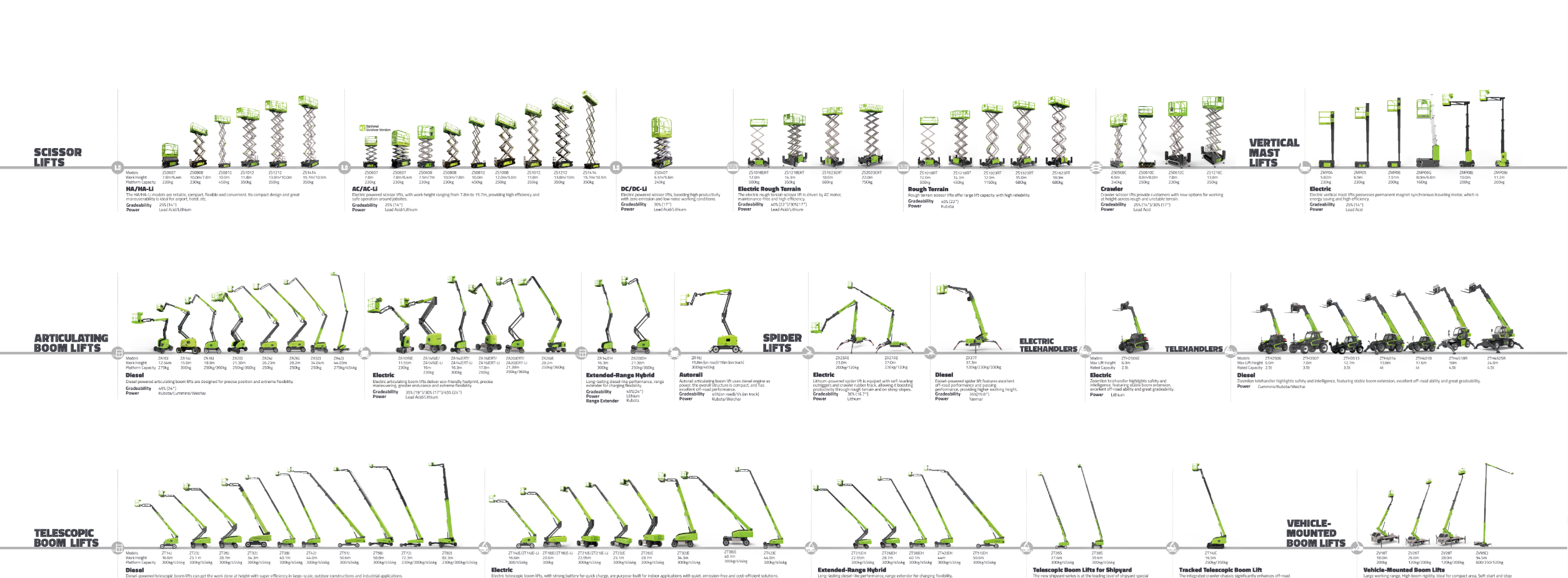
Scissor lifts — steady stage for breadth
Scissor lifts are the boxy, dependable option. They push straight up, offering generous deck space and stability. Use them when work is vertical, heavy on tools and people, and needs a flat surface.
Benefits:
- Large platform area for teams and materials.
- Straight vertical lift with minimal sway.
- Simple controls and predictable behavior—safer for routine façade work and indoor jobs.
Trade-offs and limits:

- Limited horizontal reach—not for tasks over obstacles.
- Requires a flat, firm surface; rough terrain scissor models exist but compromise deck size.
- Height-to-footprint ratio is conservative; you trade reach for steadiness.
Boom lifts — the arm that reaches and bends
Boom lifts extend, articulate, and clear obstacles. They belong where access is awkward and a straight lift won’t reach the workface. They demand operator judgment; that reach introduces movement and force.
Benefits:
- Telescopic and articulating options reach over barriers and into tight pockets.
- Work at height across uneven ground with telescoping booms and outriggers on certain models.
- Precision positioning for façade repairs, sign installations, and utility work.
Trade-offs and limits:
- Smaller platforms than scissor lifts—less room for materials or teams.
- Higher center of gravity; wind sensitivity and more complex stabilization needs.
- Maintenance and inspection are more involved—hydraulics, sensors, and booms require careful checks.
Telehandlers — the rough‑country lifter with forks
Telehandlers blur the line between lift and forklift. They move heavy loads to height, place materials where buckets and workers need them, and carry attachments that change their role.
Benefits:
- High load capacity and reach with interchangeable attachments.
- Built for rough ground and heavy material handling on construction sites.
- Versatile: forks, buckets, and man-baskets turn one chassis into several tools.
Trade-offs and limits:
- Less precise for delicate aerial work; sway and load torque matter.
- Using a man-basket adds risk and regulatory requirements—never improvise attachments.
- Bulkier footprint; site logistics and transport costs rise.
How to choose — compare by task, risk, and site
Match machine to job with three quick checks: what you must reach, what you must lift, and where you must stand. Ignore brand mystique; follow the numbers and the terrain. Common mistakes repeat: selecting height without checking outreach; counting on a telehandler for precise basket work; assuming indoor floors will bear a scissor’s weight.
Checklist:
- Reach vs. outreach: if work sits behind an obstacle, lean toward boom lifts.
- Platform area vs. payload: for two-person tool-heavy tasks choose scissor lifts.
- Ground condition: telehandlers dominate rough sites; scissor lifts prefer flat, controlled environments.
- Operator skill: complex booms need trained crews and routine refresher training.
Ownership, rental, and maintenance realities
Buying ties capital and maintenance liability to a machine; renting buys flexibility and access to newer safety features. Either way, negligence shows: deferred inspections, patchy training, and mismatched attachments cause most failures. Keep maintenance logs, require operator sign-off, and align your selection with the site’s logistic reality rather than the lowest price.
Alternatives to consider briefly: cranes for heavy, static lifts; temporary scaffolding when repeated egress is needed; modular mast lifts for confined vertical shafts. Each alternative trades mobility, speed, and cost.
Final cadence — one clear way forward
The choice is not a wager but a composition: balance reach, payload, footprint, and the humans who will operate the machine. Practical experience—time on job sites, inspections, and operator feedback—reveals patterns faster than marketing copy. For a straightforward specification that respects those patterns, consider the manufacturers and service models that publish clear load charts, maintenance intervals, and operator training guides; that clarity makes procurement safer and decisions reproducible. The harmony between task and tool resolves in a supplier whose technical guidance and field support match the decision you just made—look for that alignment at Zoomlion Access.
