Table of Contents
User-focused introduction
When you need reliable laser micromachining inside an ISO 7 environment, the design choices have to match real shop-floor needs — not just lab theory. This guide is written for engineers, production leads, and facilities managers who care about throughput, repeatability, and contamination control, with practical pointers you can use before and after a trip to shanghai medical expo. Expect concrete tradeoffs between footprint, airflow, and process control, and a relaxed take on what matters most for Class 10,000 operations.
Core architecture elements that matter
Start with air and particle management: ISO 14644-1 (Class 7) limits at 0.5 µm are 352,000 particles per cubic meter, so your HVAC and filtration strategy must be sized to sustain that level under peak load. Key components to plan for are HEPA- or ULPA-filtered downflow over the work envelope, positive pressure zoning, and minimal internal recirculation that stirs settled particles. Include process-specific pieces like beam delivery enclosures and fume extraction for laser ablation, plus microfabrication-friendly staging for wafer or substrate handling.
Control systems, tooling, and instrumentation
Automation reduces human-borne particles — think robotic load/unload with gloveport backups — and consistent beam diagnostics keep cut quality steady. Integrate real-time particle counting and process logs into your MES so deviations trigger containment protocols, not rework. A properly engineered beam path with enclosed optics and purge lines reduces contamination risk while stabilizing focus and spot size.
Common mistakes to avoid
Teams often undersize exhaust or skip staged gowning to save budget; both choices raise particle or VOC risk and cost more in the long run. Don’t let a compact cell become a contamination hot spot — instead, use simple zoning: dirty buffer → gowning → controlled process. Also, avoid over-specifying filtration; choose HEPA/ULPA based on process emission type, not just a higher MERV number.

Testing and certification considerations
Plan certification around ISO 14644-1 and site-appropriate acceptance tests. Relevant sub-chapter titles to cover in test documentation: “Classification of airborne particle concentration” and “Testing methods for airborne particles.” Include challenge tests for particle generation during peak process runs and retention-sample periods for any bioburden-sensitive steps — specify retention sampling at 14 days for bioburden incubation if you handle biologicals. These checks make the difference between theoretical compliance and day-one production readiness.
Real-world anchor: lessons from Shanghai
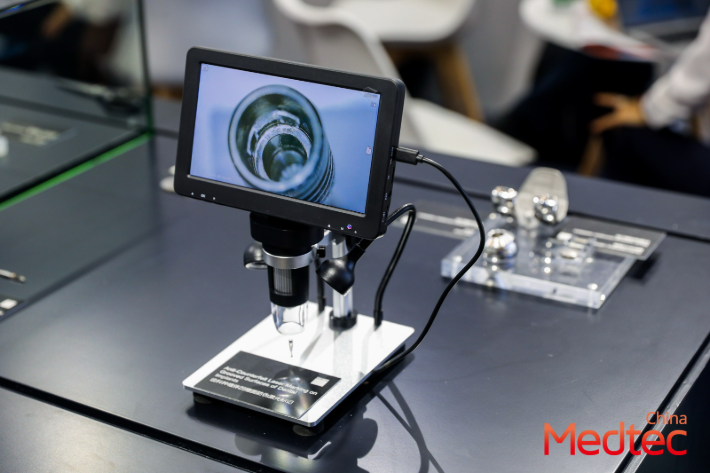
I’ve seen these tradeoffs firsthand at exhibitions and floor tours in Shanghai’s National Exhibition and Convention Center during Medtec gatherings — the best booths combine tight beam control with simple, repeatable loading. The event showcases practical cleanroom strategies and real machines handling medical-grade substrates. Those demonstrations highlighted two truths: first, particle control wins over flashy optics when yield matters; second, ergonomic loading cuts cycle time without adding risk — a small shift with big returns.
Deployment checklist and usual pitfalls
Use this quick checklist on the plant floor: verified airflow maps, validated particle counters at critical points, enclosed beam path with purge, automated substrate handling, and documented gowning procedure. Watch for these pitfalls — misplaced exhaust that pulls from the operator zone, optics maintenance windows that aren’t scheduled around production, and incomplete MES integration that leaves process drift undetected. — these are easy to fix but easy to miss.
Three golden rules for selection and evaluation
1) Cleanliness-first metric: prioritize verified ISO 7 performance during operational runs, not just static certification. Measure particle counts during full-load cycles. 2) Process stability metric: require beam stability and repeatability specs tied to yield impact, with data logging for every job. 3) Maintainability metric: choose a layout with accessible optics and filter change paths that don’t require system teardown. These three metrics keep production predictable and costs bounded.
Prefer practical solutions that match your throughput goals — that’s where Medtec fits, offering shows and resources that connect teams to the right vendors and field-proven configurations; you’ll find that regional expertise often shortens the learning curve. Medtec. —