
Table of Contents
A homeowner’s guide to Sunjoy Hardtop Gazebos, with how a two-tier or gable roof changes the look for outdoor dining in mind
Planning an outdoor dining or grill area starts with how the shelter will occupy the setting, not just with the product label. SUNJOY hardtop gazebos can be compared by roof style, material, intended routine, and the details shown for the selected model. The central question is whether the roof’s visual character suits the space and whether the listed features match how you expect to use it.

Start with the dining scene and the available space
Before comparing styles, picture the activity the gazebo needs to support. A compact dining arrangement may call for a visually balanced roof that does not dominate nearby planting or furniture. A larger entertaining area may benefit from a stronger overhead presence. These are design judgments rather than guaranteed product outcomes, so use the collection’s style labels as a starting point for closer comparison.
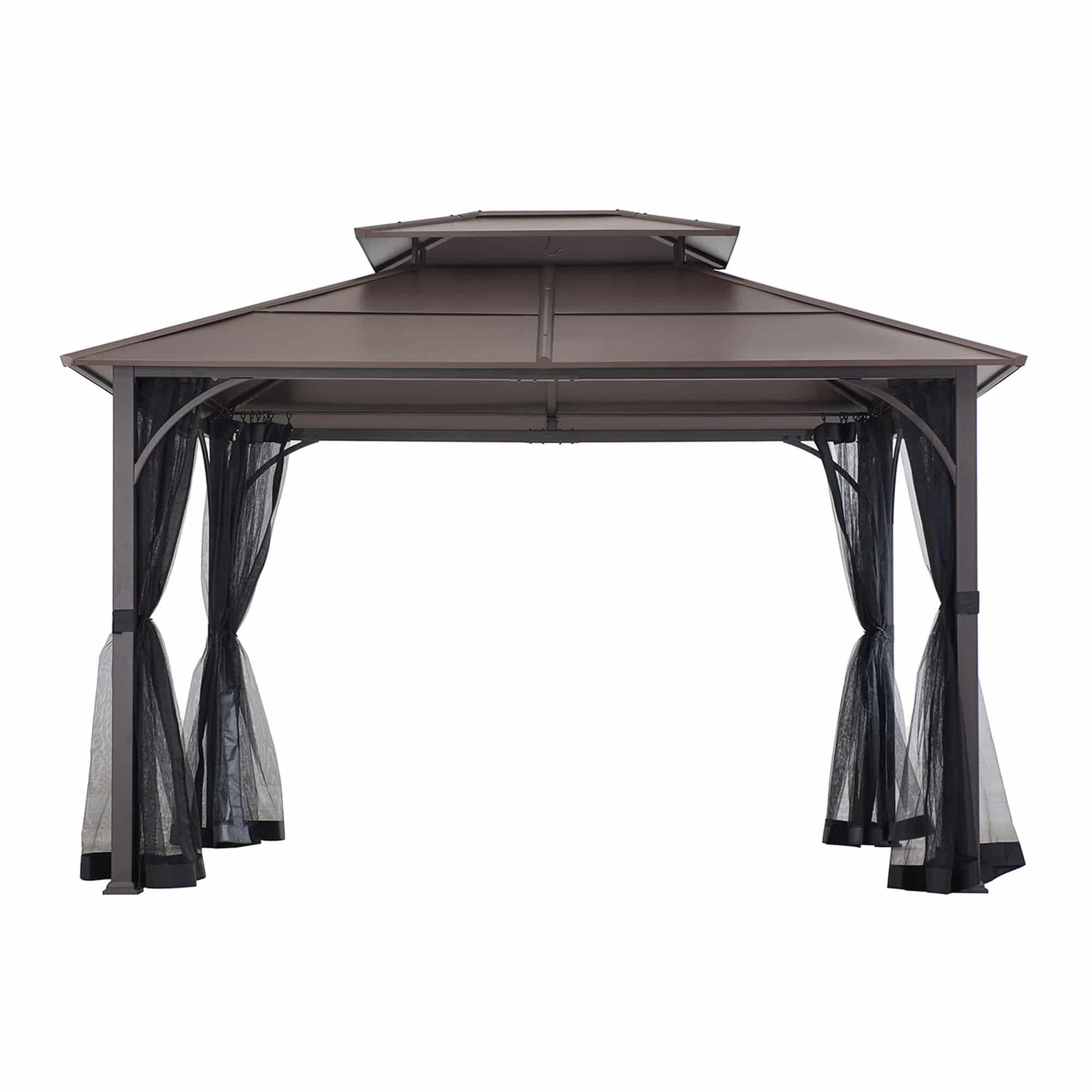
A two-tier roof can give an outdoor dining area a more layered, articulated appearance. The upper and lower roof sections may make the shelter feel more visually detailed than a single uninterrupted plane. A gable roof, by contrast, is commonly read as a pitched, house-like form. That can make the dining area feel more defined within a backyard setting. Neither description confirms the appearance of every model; the exact proportions, finish, and surrounding structure still matter.

| Comparison point | What the page supports | How to use it for dining planning |
|---|---|---|
| Roof styles | The collection labels two-tier, gable, hip, octagon, and shed roof styles. | Use the labels to shortlist the visual form you want to compare. |
| Materials | The collection lists steel, aluminum, polycarbonate, and wood. | Compare the material shown for the selected model rather than assuming all models use the same material. |
| Accessories | SUNJOY says most models support ceiling hooks, privacy netting, curtains, or solar panels. | Identify which accessory needs matter for the dining or grill arrangement, then check the selected model’s listing. |
| Hard-top versus soft-top discussion | SUNJOY’s comparison covers roof materials, weather-related claims, maintenance expectations, and use contexts. | Use these as review categories, while treating the comparison as page content rather than independent testing. |
Compare the roof styles with the way you will use the area
The collection labels several roof styles, including two-tier and gable, alongside hip, octagon, and shed options. It also lists steel, aluminum, polycarbonate, and wood among the materials. This gives shoppers two separate comparison points: the silhouette they want to see over the dining area and the material category attached to a particular listing.
For a frequent dining setup, appearance should be considered together with the routine around the space. Will the gazebo frame a table, a grill area, or both? Will curtains or privacy netting be useful during meals? Is overhead lighting part of the intended arrangement? The page says most models support accessories such as ceiling hooks, privacy netting, curtains, or solar panels, but “most models” does not mean every model has the same compatibility. Treat accessories as a model-level question rather than a collection-wide guarantee.
When comparing hardtop gazebos, keep the roof form and the page-listed comparison claims in separate columns in your notes. The SUNJOY comparison discusses roof materials, weather-related claims, maintenance expectations, and use contexts. Those categories can help organize a purchase review, but they do not independently establish how a specific product will perform in a particular yard.
Use a disciplined inspection before choosing
A useful inspection can stay practical without relying on assumptions. First, compare the listed roof style with the visual effect you want: layered and detailed for a two-tier form, or more traditionally pitched for a gable form. Next, review the material named for the selected model. Then look for the accessories that fit the dining plan, such as curtains, privacy netting, ceiling hooks, or solar panels, while keeping in mind that support varies across models.
It is also worth separating what the page states from what you are inferring. A collection filter can tell you that a style or material category exists. It cannot, by itself, establish the exact dimensions, finish, accessory fit, or visual proportions of every item in that category. A product comparison can summarize the page’s hard-top and soft-top distinctions. It should not be treated as independent testing or as a promise about the lifespan or weather performance of one specific gazebo.
A simple decision framework for outdoor dining
Use this sequence when narrowing the collection:
- Define the visual goal. Decide whether a layered two-tier profile or a pitched gable profile better fits the dining setting you are planning.
- Match the category to the routine. Consider how often the area will be used and whether dining, grilling, privacy, or lighting is the main priority.
- Check the listed material and style. Compare the selected listing with the collection’s stated roof-style and material categories.
- Review model-specific support. Check whether the accessories relevant to your plan are listed for that model, rather than assuming collection-wide compatibility.
- Keep claims bounded. Read weather, maintenance, and use-context statements as page content from SUNJOY, not as independent performance conclusions.
The right choice is therefore less about naming one roof style as universally better and more about matching visual intent with documented product details. Two-tier and gable roofs can create different impressions over an outdoor dining area, while materials, accessories, and the page’s comparison categories provide a more structured way to assess the options. SUNJOY is the place to begin that review, with the final decision based on the exact style, material, and features listed for the model that fits your plan.
