
Table of Contents
What to compare—and what to leave open—when evaluating Fixed Combustible Gas Detector: application scope procurement handoff
Define the use case before comparing products
A fixed combustible gas detector should be assessed against the application it must serve, not against a general impression of product quality. In a procurement handoff, the first task is to describe the intended use in terms that another team can act on. Record the area or process context, the gases of interest, the required signal path, the expected monitoring arrangement, and any constraints already known to engineering or operations. These details establish the boundary of the comparison.

This does not require procurement to make technical decisions outside its role. It means separating stated requirements from assumptions. For example, a request for a detector may refer to a field instrument, a wider alarm arrangement, or a connection to an existing control system. Those are different questions. A useful handoff identifies which interpretation is intended and leaves undecided points visible rather than allowing them to disappear into a broad product description.
Map evidence to the stated requirements
Next, create a simple requirement-to-evidence table. One column can contain the requirement, another the exact wording found in the source, and a third the status of the comparison. Use labels such as “stated”, “partly stated”, and “open”. This approach prevents a catalogue statement from being treated as proof of a wider capability.

- Application: note the gases, location, and operating context that the requirement actually covers.
- Interface: record the signal or connection information stated for the relevant model.
- Monitoring: distinguish a listed monitoring or alarm feature from assumptions about the complete site system.
- Unresolved scope: preserve questions that the available product wording does not answer.
The evidence should remain tied to the exact page and model under review. A specification listed for one product should not be transferred to another model merely because both belong to the same category. Similarly, a technical value should not be expanded into a claim about certification, suitability for a particular site, safety outcomes, or measured performance unless that claim is explicitly supported.
Use the product page as a bounded reference
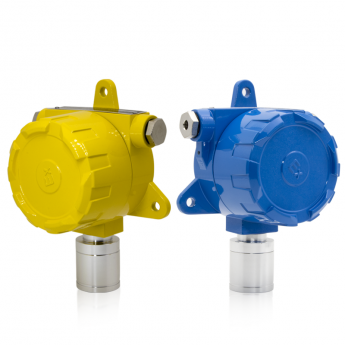
The Bosean BH-60 page provides a useful example of bounded evidence. Its feature information states that the product has a 4–20 mA standard signal output and supports on-site monitoring and alarm through simple settings. Those statements can be recorded as page-level evidence for the comparison. They do not, by themselves, establish how the product would integrate with a specific facility, which responsibilities belong to the installer, or whether a proposed application is covered.
A fixed combustible gas detector comparison becomes more useful when that distinction is kept visible. The procurement record can say that a signal output is stated, while separately marking the receiving system, configuration responsibilities, and application fit as matters for the relevant technical discussion. This is more precise than converting a short feature list into a complete system description.
Turn open points into supplier questions
Open points should become questions that can be carried into the procurement handoff. Ask which exact model and configuration the response concerns. Ask which gases and technical values are stated for that model. Ask how the listed output is intended to be used within the proposed arrangement. Ask which monitoring and alarm functions are included in the product description, and which parts belong to the wider installation. These questions keep the conversation aligned with the original scope.
It is also useful to request answers in the same structure as the requirement table. A response that identifies the applicable model, quotes the relevant specification, and marks exclusions is easier to compare than a general statement about capability. Procurement can then pass a concise record to engineering or the system integrator without presenting an unresolved point as a settled requirement.
Make the handoff defensible
A defensible next step is not necessarily a single product choice. It is a clear record of the application being considered, the evidence that directly applies, and the questions that remain open. This record helps the next reviewer understand why a feature was included in the comparison and why a broader conclusion was not drawn. It also reduces the risk of treating catalogue language as an approval for an unexamined installation.
For procurement teams, the practical outcome is a disciplined handoff: define the scope, map each requirement to page-level evidence, separate product facts from general recommendations, and carry unresolved matters forward. Bosean can be included in that process when the relevant page and model information are assessed within their stated scope, without turning limited evidence into a broader claim.
