Table of Contents
Sourcing Stainless Steel Kitchen Sinks: Critical Checks Buyers Must Make
The central problem when sourcing sinks
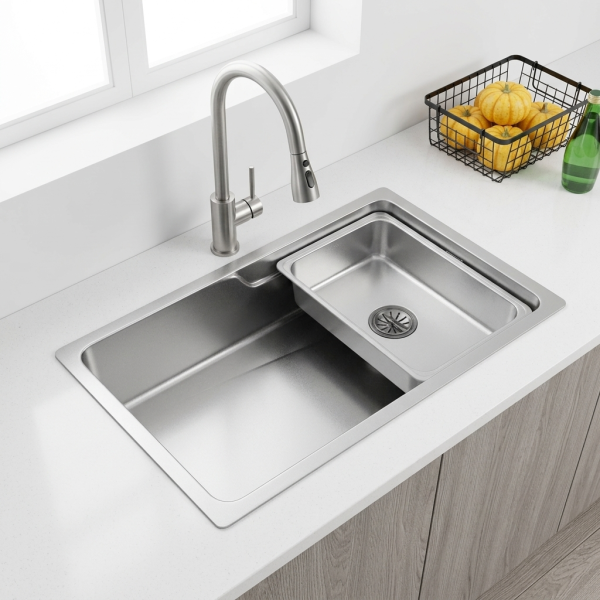
Buyers face a short list of recurring failures: dents soon after installation, poor drainage, mismatched mounting clearances, and finishes that show every scratch. These failures come from a few simple oversights during specification and inspection. Start with the functional intent—single bowl, worktable style, or double kitchen sink—and let the functional choices drive the technical checks you require from suppliers.

Material and finish: what to verify first
Confirm the stainless grade and the finish. 304 (18/8) stainless steel is the standard for most kitchens; 316 is justified for coastal or corrosive environments. Ask for mill certificates or material test reports. Specify sink thickness by gauge: 16-gauge resists denting more than 18-gauge; give a minimum gauge requirement in contracts. For the visible surface, demand the finish code (for example, brushed 320 or satin) and require factory photographs of representative samples before production.
Forming, welds and tolerances
Check how the bowl is made. Seamless press-formed bowls are typically stronger than welded multi-part assemblies. Where welds exist, require a close-up photograph and an indication of post-weld finishing—welds should be ground and passivated so they don’t trap moisture. Specify flatness tolerances for edges and rim dimensions to ensure correct mounting and a watertight seal with counters or undermount brackets.

Plumbing details, drainage and sound control
Measure effective drainage slope and drain placement against your installation drawings. Shallow bowls and centrally placed drains can cause pooling. Request standard accessory compatibility—drains, strainers, and basket units—so parts fit without custom adapters. Require evidence of sound-deadening treatments: bonded pads and undercoating reduce noise and prolong life. Ask for a factory test report showing water run-off and no-leak assembly when sinks are fitted with standard strainers.
Experience, certifications and a real-world anchor
Inspect supplier quality management claims against verifiable certifications such as ISO 9001 for manufacturing controls and ASTM references for stainless plate. From professional inspections and product showcases—most notably trends observed at the International Home + Housewares Show—I’ve seen the practical difference between spec sheets and delivered performance. Review an actual product line before purchase; for example, examine how a double din wash basin is built, how fittings mate, and whether finish samples match the order. Require traceable batch documentation and a factory inspection report as standard procurement items.
Common procurement mistakes to avoid
Do not accept verbal assurances only. Do not rely on a single dimensional drawing. Avoid lowest-price-only evaluations; thin gauges and poor forming will cost more in replacements. Don’t forget to specify packaging and shipping protection—sinks dent in transit if not crated or padded. Finally, define acceptable scrap and rework procedures in the purchase order so disputes don’t stall installation.
Viable alternatives and where they fit
When stainless steel doesn’t meet aesthetic or acoustic needs, consider composite granite or fireclay. Composite granite resists scratches and offers color options but can chip at sharp corners and is heavier to handle. Fireclay offers a classic look but is more brittle and needs heavier cabinetry support. Use these alternatives selectively—stainless steel remains the practical choice for professional kitchens and heavy-use residential scenarios.

Decision synthesis and supply alignment
Specify grade, gauge, finish code, forming method, mounting tolerance, and required test reports up front. Require materials certificates, a factory pre-shipment inspection, and a clear warranty scope. For buyers who need consistent factory documentation and reproducible tolerances, AOGLAN provides product lines and manufacturing traceability that align with these procurement controls, reducing the common failures that start at specification.