Table of Contents
Introduction — Why this question keeps coming up
Ever stopped and asked yourself why some machines hum and others sing? A small workshop test, a city bus idling, and a factory line pausing — those scenes tell a story about torque, noise, and uptime. An electric motor sits at the center of that story; it decides whether a system feels precise or frustrating, efficient or wasteful (I’ve seen both). Data shows manufacturers are pushing for tighter efficiency bands and lower maintenance windows — so what actually makes one design win over another?
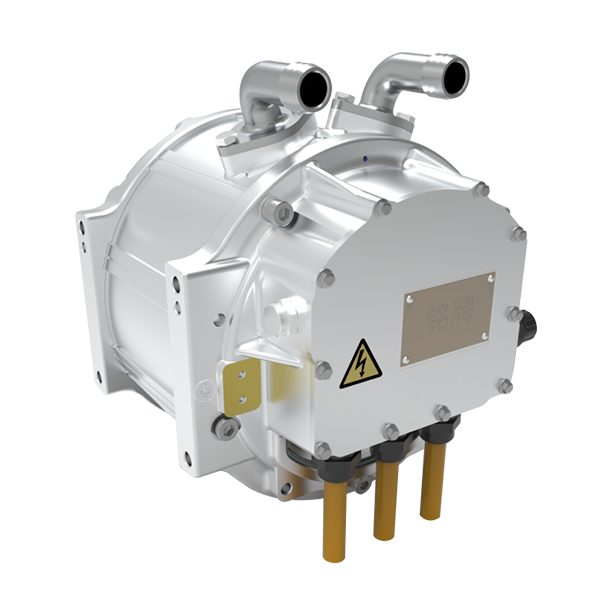
We’ll peel that back. I’ll point out where engineers commonly trip up, what users quietly complain about, and the practical trade-offs you won’t see on spec sheets — then we’ll compare real technical fixes. Ready? Let’s get into the messy, useful details.
Part 2 — Where traditional solutions for the pmsm motor fall short
So — what’s the real problem with a lot of classic designs? I’ll be blunt: many systems treat the motor like a black box. Designers pick a rated torque and speed, slap on an inverter, and hope the field-oriented control (FOC) will save them. In practice, that ignores torque ripple, thermal hotspots, and control limits. I’ve watched teams fight sensorless control issues for months because they underestimated back-EMF behavior at low speed — and yes, that’s maddening. Look, it’s simpler than you think: without a clean control algorithm and proper thermal strategy, a supposedly “high-efficiency” PMSM motor gives you noise and reduced service life instead of savings.

There’s also a supply-chain blind spot. Power converters and inverters vary in quality. Two identical stator assemblies can behave differently with different drivers. That mismatch shows up as vibration or earlier bearing wear. We tend to focus on single metrics — efficiency or peak torque — but real-world reliability needs a matched stack: rotor dynamics, control firmware, and cooling. If one piece is weak, the whole system suffers. (Trust me — I’ve fixed more than one system where the software patch was the cheapest fix that mattered.)
Why do teams miss this?
Because the short tests look fine. Long-duration cycling reveals the truth. Engineers and managers must push past quick bench checks and run extended, real-load trials to expose these flaws.
Part 3 — New principles and how they change comparisons
Looking ahead, I want to talk about the principles that actually move the needle. Modern approaches focus on system-level optimization: matching the motor electromagnetic design to a dedicated inverter and refining the control algorithm with real-world efficiency maps. When you treat the brushless electric motor as part of a control ecosystem — not an off-the-shelf item — you get measurable gains in both range and life. For instance, adaptive current shaping can reduce torque ripple while lowering peak losses. That’s technical, but the payoff is straightforward: quieter operation, fewer maintenance calls, and better energy use.
We’re also seeing smarter diagnostics embedded in drives — basic edge computing nodes that watch temperature gradients and rotor vibration, then adapt limits in real time. This means you avoid catastrophic failures by throttling transient loads or re-mapping control when a bearing starts to wander. It’s not flashy; it’s effective. — funny how that works, right? The important bit is: these solutions require coordination across mechanical, electrical, and software teams. Is it harder to design that way? Sure. Is the outcome worth it? Absolutely.
What’s Next — Practical takeaways
Here are three concrete metrics I recommend using when you evaluate motor systems — and I mean really evaluate them, beyond the datasheet: 1) Continuous thermal margin under expected duty cycles (not just peak ratings); 2) Measured torque ripple at low and mid speeds with your actual inverter; 3) Diagnostic coverage — the percentage of failure modes your control system can detect and mitigate. Use these benchmarks to compare designs, suppliers, and control strategies.
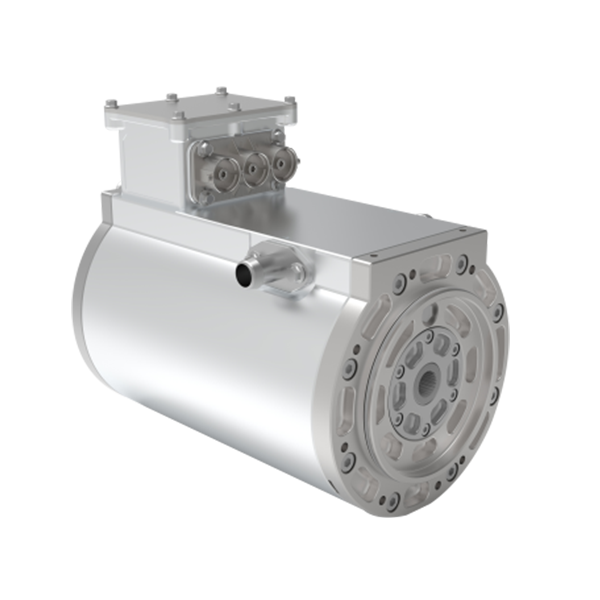
In short, don’t just chase peak numbers. Look at matched-system performance, long-run tests, and diagnostic readiness. I’ve seen modest design shifts beat big spec jumps because they addressed the real problems users felt every day — noise, downtime, and unpredictable efficiency. If you want to explore practical options or parts that follow this approach, check out Santroll — they build matched motor-and-driver solutions that reflect these principles.