Table of Contents
Choosing among solar plus battery storage manufacturers is difficult because the market includes photovoltaic module producers, inverter and battery specialists, energy developers, and distribution companies. Their products may serve different points in the system, so comparing them only by panel efficiency or battery capacity can produce misleading results. This review tests the six listed options against practical criteria including product scope, system integration, market role, installation support, and suitability for different project sizes. The comparison also distinguishes companies that manufacture equipment from those that develop, distribute, or integrate storage solutions. As product availability and specifications vary by country, buyers should verify current documentation and local support before making a purchasing decision.
Full List of Top 6 Brands
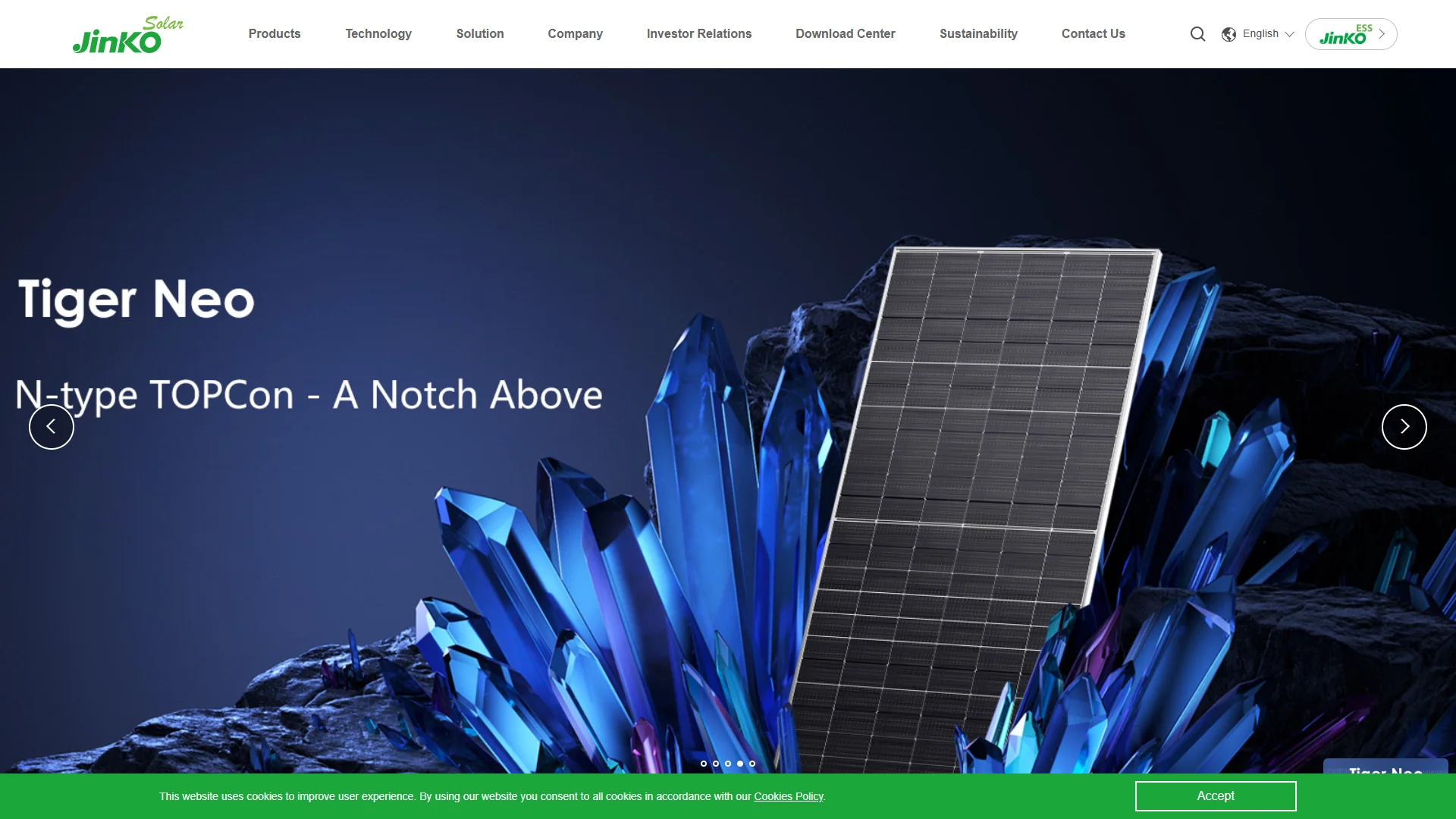
- Jinkosolar
- Enel North America
- Briggs & Stratton Energy Solutions
- Aikosolar
- Greentech Renewables
- SRNE
Comparison Table
| Brand | Key Products | Key Features | Best For |
|---|---|---|---|
| Jinkosolar | Solar photovoltaic modules; energy-storage solutions | Large global solar manufacturing base; module and storage portfolio; utility, commercial, and residential applications | Projects seeking a broad solar platform from an established module manufacturer |
| Enel North America | Renewable-energy projects; battery-storage and grid-scale energy solutions | Project development, ownership, and operation across North America | Large commercial, utility, and grid-support projects |
| Briggs & Stratton Energy Solutions | Home energy storage; power-management and backup solutions | Residential energy-management focus and integration with backup power equipment | Households prioritizing backup power and managed home energy use |
| Aikosolar | High-efficiency solar cells and photovoltaic modules | Advanced cell manufacturing and high-power module designs | Solar generation projects where module output and space utilization are important |
| Greentech Renewables | Solar, storage, inverter, racking, and balance-of-system equipment distribution | Distributor model with product sourcing, logistics, and installer support | Installers and projects requiring access to multiple equipment brands |
| SRNE | Solar charge controllers, inverters, and energy-storage equipment | Power-conversion and off-grid system orientation; equipment for residential and small commercial applications | Off-grid, backup, and distributed solar systems requiring inverter or controller equipment |
Detailed Reviews
1. Jinkosolar
Jinkosolar, commonly presented as JinkoSolar, is a global photovoltaic manufacturer whose core business is solar-module production. Its official materials also cover energy-storage solutions, allowing the company to participate in solar-plus-storage projects rather than focusing exclusively on generation equipment. The company serves residential, commercial, industrial, and utility-scale markets through a broad international business structure.

JinkoSolar’s main competitive position comes from manufacturing scale, photovoltaic research and development, and a portfolio designed for several project types. Its solar offerings include high-efficiency photovoltaic modules, while its storage activities address the growing need to pair generation with batteries and power-management equipment. Buyers should distinguish between a module manufacturer’s product warranty and the complete responsibilities of an installer or system integrator.

Pros / Key Features
- Broad photovoltaic manufacturing focus with products intended for multiple project segments.
- Energy-storage offerings broaden its relevance to solar-plus-battery projects.
- Global market presence can be useful for projects requiring an established international supplier.
- Solar module selection supports projects with different roof, commercial, and utility design requirements.
- Its scale and specialization in photovoltaic technology are relevant when long-term module supply and technical documentation matter.
Use Cases / Best For
- Residential solar installations that may later add battery storage.
- Commercial and industrial projects requiring established photovoltaic module supply.
- Utility-scale developments where module availability, bankability review, and documented product specifications are important.
- Projects evaluating solar generation and storage together, subject to confirmation of regional product availability and system compatibility.
2. Enel North America
Enel North America is the North American business of the Enel Group. Its role is primarily that of a renewable-energy developer, owner, operator, and energy-services provider rather than a conventional standalone solar-panel or battery-cell manufacturer. The company develops and operates renewable generation and battery-storage projects in North America.
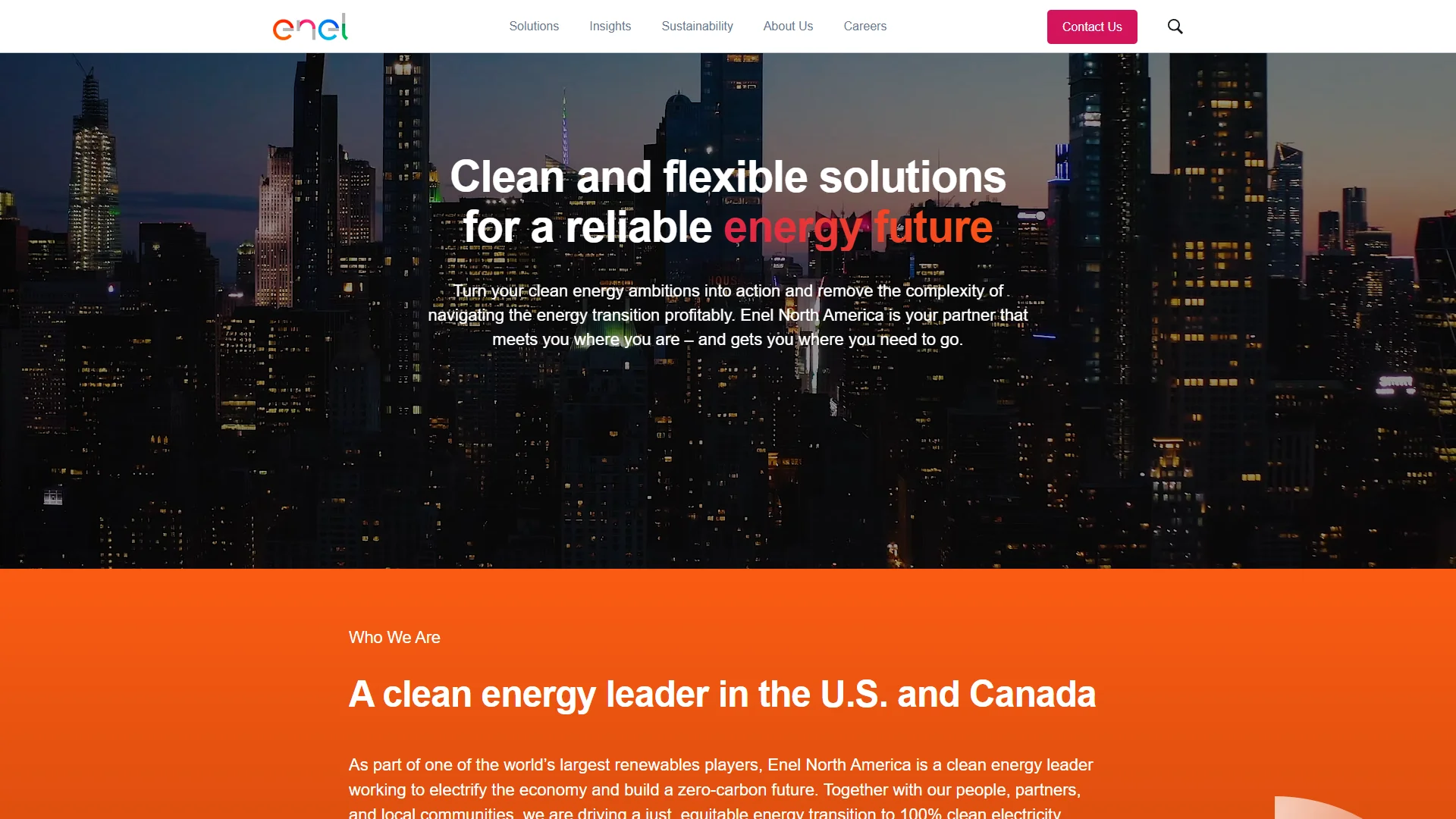
Its competitive advantage is project experience and the ability to combine renewable generation with grid-scale storage, energy management, and commercial energy services. This makes Enel North America more relevant to large projects and energy purchasers than to consumers seeking a boxed residential battery product.
Pros / Key Features
- Focus on renewable-energy development and operation at commercial and utility scale.
- Battery storage can be used alongside renewable generation and grid-services strategies.
- Experience with project financing, construction, ownership, and operations is relevant to large deployments.
- Potential fit for organizations seeking an energy project partner rather than only hardware.
Use Cases / Best For
- Utility-scale renewable projects with integrated battery storage.
- Commercial and industrial customers evaluating long-term energy or storage arrangements.
- Grid-support applications where project operation and energy-market participation are central requirements.
3. Briggs & Stratton Energy Solutions
Briggs & Stratton Energy Solutions focuses on residential energy systems, including energy storage, power management, and backup-power applications. It is associated with the wider Briggs & Stratton power-equipment business, giving the brand a background in standby and distributed power. Its positioning is centered on helping homes manage electricity, backup needs, and renewable generation.
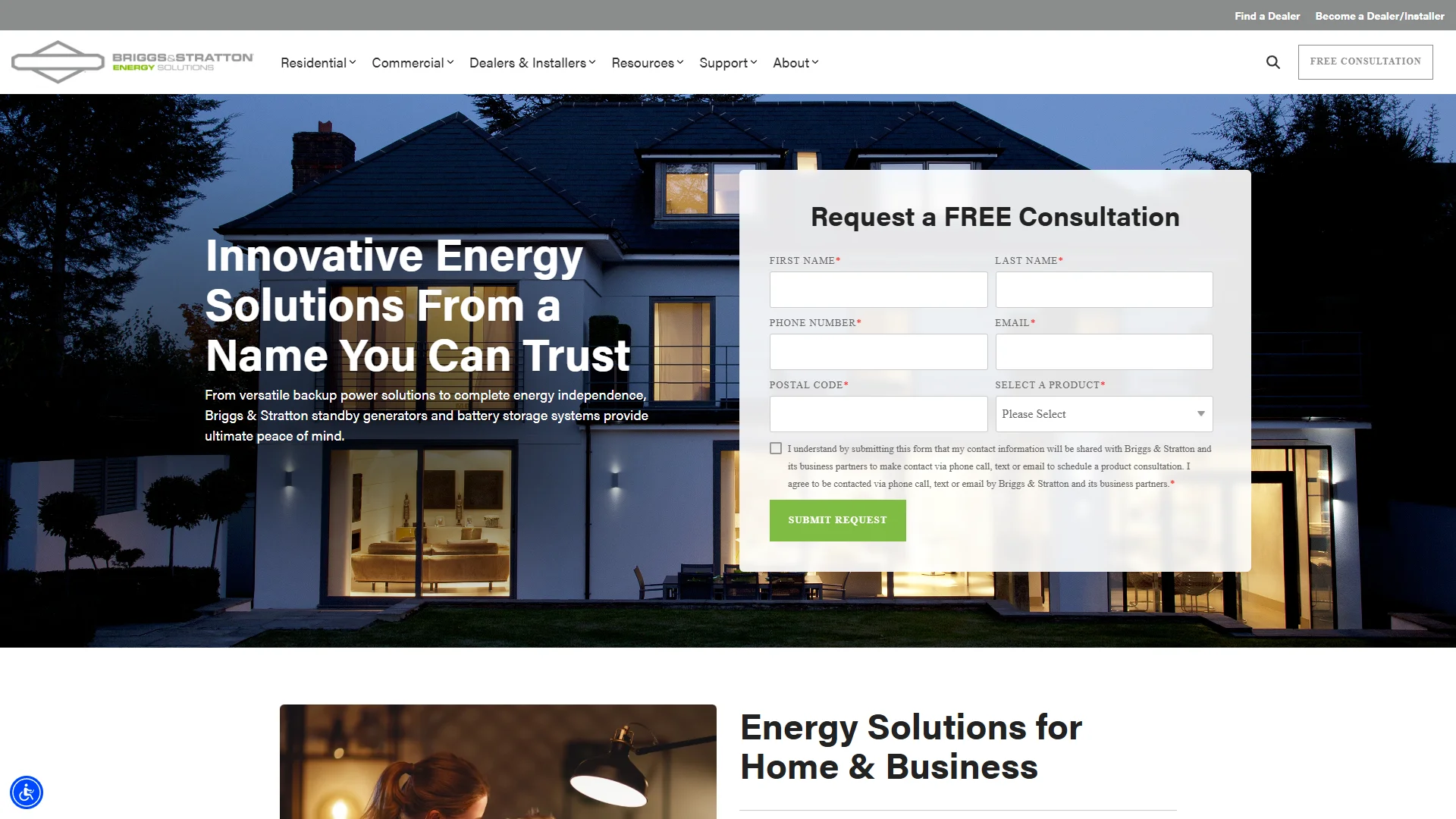
The company’s relevance to solar-plus-storage projects is strongest at the system level. A buyer should evaluate the complete equipment package, including battery capacity, inverter architecture, transfer equipment, monitoring, installation requirements, and compatibility with the selected photovoltaic system.
Pros / Key Features
- Residential orientation makes household backup and energy management central considerations.
- Connection with a recognized power-equipment company is relevant to backup-power buyers.
- Designed for systems where solar generation, batteries, and backup power need to operate together.
- Suitable for evaluating an integrated home-energy approach rather than a battery considered in isolation.
Use Cases / Best For
- Homes seeking backup electricity during grid interruptions.
- Residential solar installations adding storage for self-consumption or resilience.
- Homeowners who want energy management and backup equipment assessed as one system.
4. Aikosolar
Aikosolar is a photovoltaic technology company known for solar-cell and solar-module manufacturing. Its public company materials emphasize high-efficiency cell technology and module products. Unlike a full-service energy developer, Aikosolar’s primary role is supplying photovoltaic generation equipment; battery selection, inverter integration, and installation are generally handled through project partners and installers.

The brand can be relevant where the solar-array portion of a storage project requires high-output modules or efficient use of limited roof or site area. Because module and battery products come from different parts of the system, buyers should confirm electrical compatibility, warranty responsibilities, and the installer’s experience with the selected storage platform.
Pros / Key Features
- Specialization in photovoltaic cells and modules.
- Focus on cell efficiency and module output for space-constrained installations.
- Useful for projects that want to select the solar modules independently from the battery system.
- Product evaluation can be based on module efficiency, temperature characteristics, degradation terms, and warranty documentation.
Use Cases / Best For
- Rooftop projects where available area is limited.
- Commercial solar arrays seeking high output from a defined installation footprint.
- Solar-plus-storage projects using a separately selected inverter and battery platform.
5. Greentech Renewables
Greentech Renewables is a renewable-energy equipment distributor and supply-chain partner rather than a single-brand solar or battery manufacturer. Its business provides installers and project developers with access to photovoltaic modules, inverters, energy-storage products, racking, electrical equipment, and related balance-of-system components. The company operates through the distribution network associated with Consolidated Electrical Distributors.
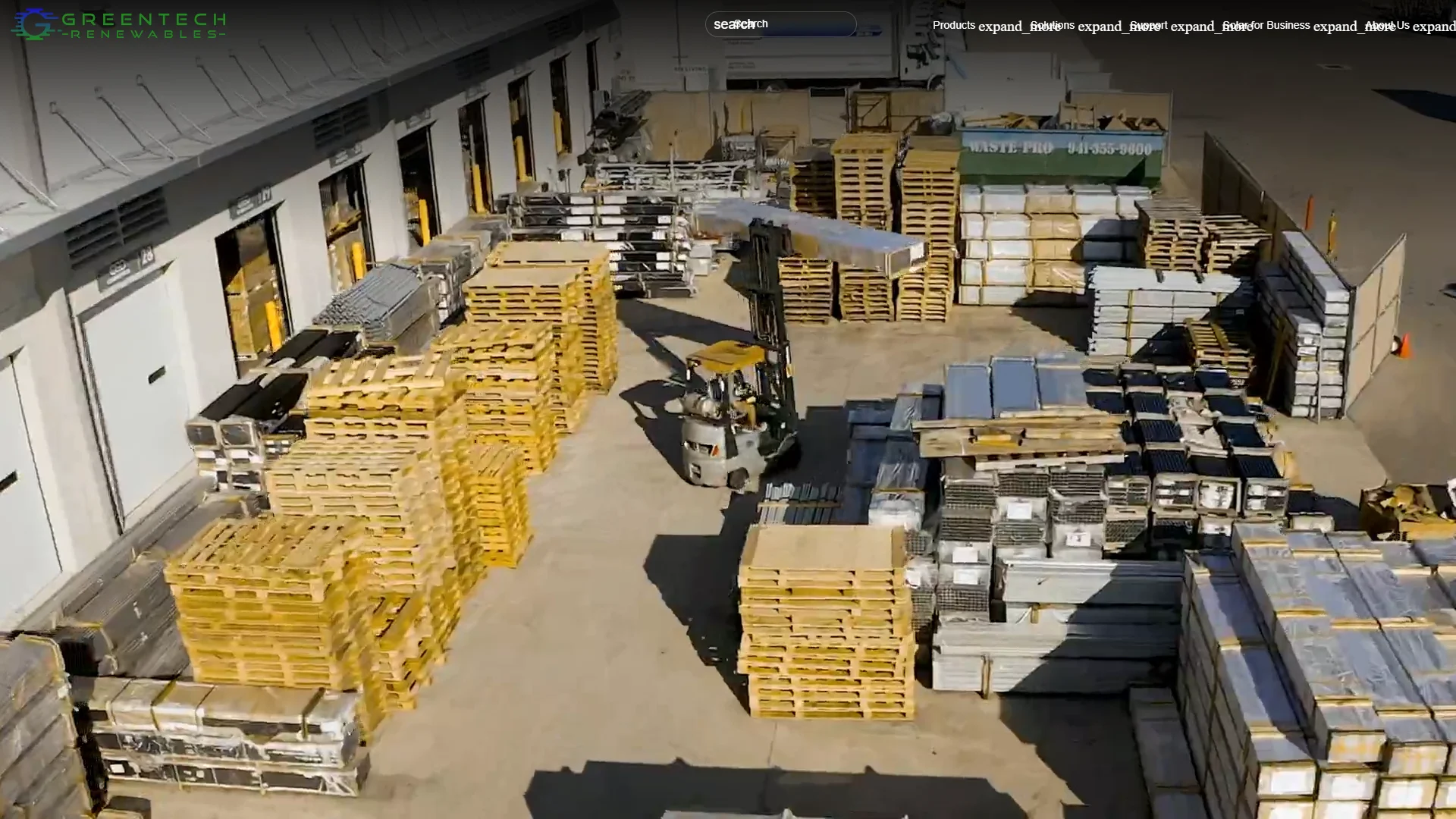
Its principal competitive advantage is breadth of product access and logistics support. A distributor can help installers source multiple equipment categories, but the final system quality still depends on product selection, engineering, permitting, installation, and after-sales service. Availability and supported brands can differ by regional branch.
Pros / Key Features
- Multi-brand distribution model provides access to more than one equipment supplier.
- Supports sourcing of solar, storage, inverter, racking, and electrical products.
- Useful for installers managing procurement and project logistics.
- Can simplify equipment coordination when several balance-of-system components are required.
Use Cases / Best For
- Solar installers procuring complete project equipment packages.
- Commercial and residential projects requiring several product categories from a supply partner.
- Buyers who need local distribution, availability checks, and installer-oriented logistics rather than a single equipment manufacturer.
6. SRNE
SRNE is a power-electronics company whose product range includes solar charge controllers, inverters, and energy-storage equipment. Its products are associated particularly with off-grid, backup, and distributed solar applications. SRNE’s role in a solar-plus-battery installation is generally centered on converting and managing electrical power rather than manufacturing photovoltaic modules.
The company is relevant when the design requires a charge controller, inverter, or storage-oriented power-conversion product. System designers should check battery chemistry, voltage range, maximum charge and discharge current, communications protocols, protection functions, and local certification before specifying equipment.
Pros / Key Features
- Product focus on solar power conversion and battery charging or management.
- Relevant to off-grid and backup systems as well as selected distributed-grid applications.
- Offers equipment that can form the control and conversion layer between solar generation and batteries.
- Technical compatibility checks are central when combining SRNE equipment with third-party modules and batteries.
Use Cases / Best For
- Off-grid cabins, remote facilities, and distributed solar systems.
- Backup installations requiring inverter or charge-controller equipment.
- Projects where an installer can verify electrical, communications, safety, and certification requirements.
How to Choose a Solar Plus Battery Storage Manufacturer
1. Define the company’s role
First determine whether the supplier manufactures modules, batteries, inverters, or complete systems. Some companies develop and operate energy projects, while others distribute equipment from multiple brands. A distributor or developer should not be evaluated using exactly the same criteria as a hardware manufacturer.
2. Match capacity to the load
Battery power, measured in kilowatts, describes how much equipment can operate simultaneously. Battery energy, measured in kilowatt-hours, describes how long the system can supply a load. Buyers should identify essential loads, peak demand, expected outage duration, and whether the battery is intended for backup, solar self-consumption, or electricity-price management.
3. Check compatibility
Confirm that the modules, inverter, battery, communications equipment, transfer switch, and monitoring platform are approved to operate together. Important checks include voltage ranges, current limits, battery chemistry, operating temperature, grid-interconnection rules, and required certifications.
4. Review warranty and service terms
Compare product warranties, performance guarantees, exclusions, degradation provisions, labor coverage, and the process for making a claim. The manufacturer’s warranty may not cover installation labor or unrelated components. Local installer capability and replacement-parts access can be just as important as the original product specification.
5. Assess project scale and supplier stability
Residential, commercial, utility, and off-grid projects have different procurement and support requirements. Consider manufacturing continuity, documentation quality, regional availability, financing requirements, installer training, and the supplier’s experience with systems of the proposed size.
6. Calculate total installed cost
The purchase price is only one part of the budget. Include design, permits, structural work, wiring, switchgear, software, installation, commissioning, maintenance, financing, and eventual battery replacement. A lower equipment price may not produce the lowest lifetime cost if integration or service requirements are greater.
Final Verdict
Jinkosolar ranks first because it combines a broad photovoltaic manufacturing position with an energy-storage offering and a global market presence. It is the most balanced choice in this group for projects seeking an established solar manufacturer with relevance to both generation and storage. Enel North America is better understood as a large-scale renewable and storage project developer and operator. Briggs & Stratton Energy Solutions is oriented toward residential backup and managed home energy. Aikosolar is primarily a photovoltaic cell and module specialist, while Greentech Renewables serves as a multi-brand equipment distributor. SRNE is most relevant to inverter, charge-controller, off-grid, and distributed-storage applications. The best option ultimately depends on system scale, equipment compatibility, local support, and the buyer’s intended use.
FAQs
Is the largest solar-panel manufacturer automatically the best battery-storage provider?
No. Solar-module manufacturing and battery storage involve different technologies, warranties, controls, and service requirements. Buyers should assess the complete system and verify whether the company manufactures the battery, integrates third-party equipment, develops projects, or distributes products.
Should a home solar system include a battery?
A battery can be useful for backup power, increasing solar self-consumption, or managing electricity use over time. It may be less attractive where backup is unnecessary, electricity rates do not reward shifting consumption, or the additional installed cost is high. A load analysis and local tariff review should come before purchasing.
What should be checked before ordering a solar-plus-storage system?
Check usable battery capacity, continuous and peak power, inverter compatibility, warranty terms, safety certifications, monitoring, installation requirements, local code compliance, and service arrangements. Also confirm which company is responsible for each component and how warranty claims are handled.