Table of Contents
A user-centred imperative for contemporary outdoor lighting
Practitioners and homeowners now expect landscape lighting to serve simultaneously as ambience, wayfinding and responsive control rather than merely as a security light; this shift places new demands on specification, siting and supplier collaboration. When considering bespoke outcomes it is prudent to test custom outdoor lighting early in the design cycle so that lumen output, beam angle and control strategies are validated against the actual site. The user-centric perspective begins with clear objectives: what emotional tone should the garden convey, how should movement be negotiated, and how will maintenance and energy budgets constrain long-term choices?
Core technical and design considerations for users
Effective integration rests on three interlocking factors: optical intent, control strategy, and environmental durability. Optical intent requires attention to correlated color temperature (CCT), CRI and beam angle so that plants, materials and façade textures render as intended at night. Control strategy includes motion sensor selection, dimming profiles and scene programming to balance safety and energy efficiency. Environmental durability demands appropriate IP rating and thermal management to protect LEDs from dust, moisture and heat. Site mock-ups and photometric tests—rather than assumptions—should govern final fixture placement and tilt.
Practical deployment scenarios and a real-world anchor
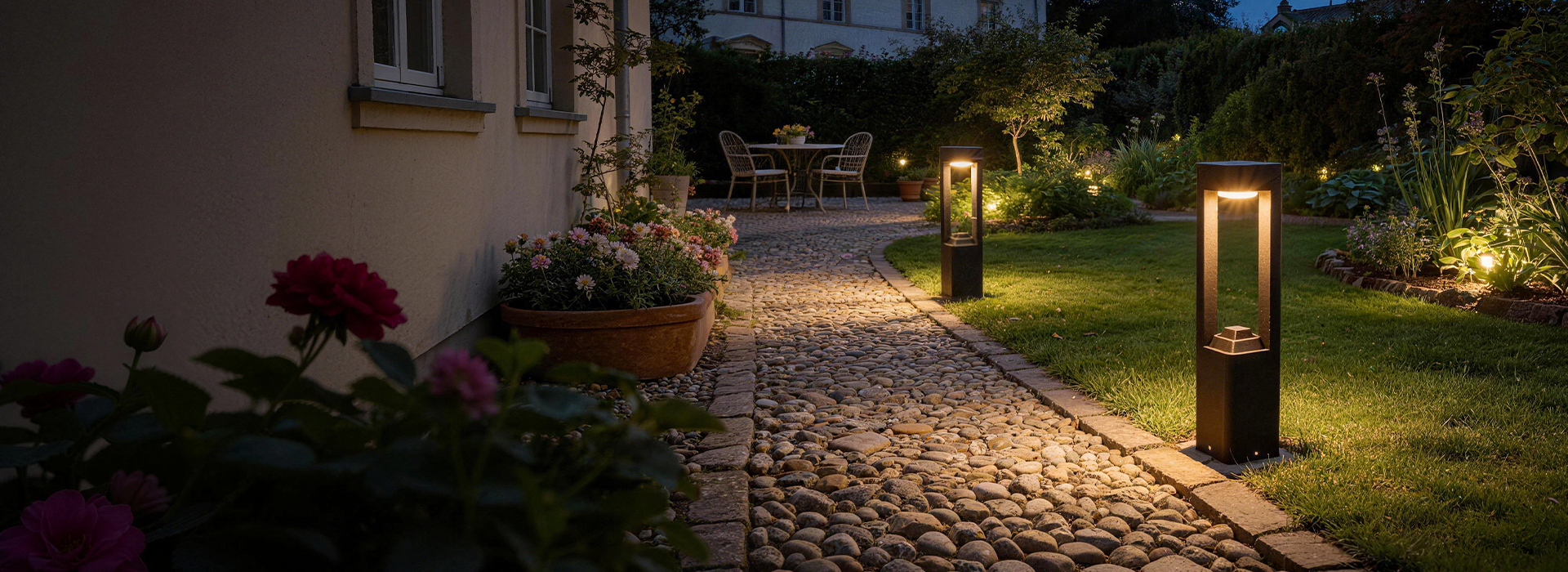
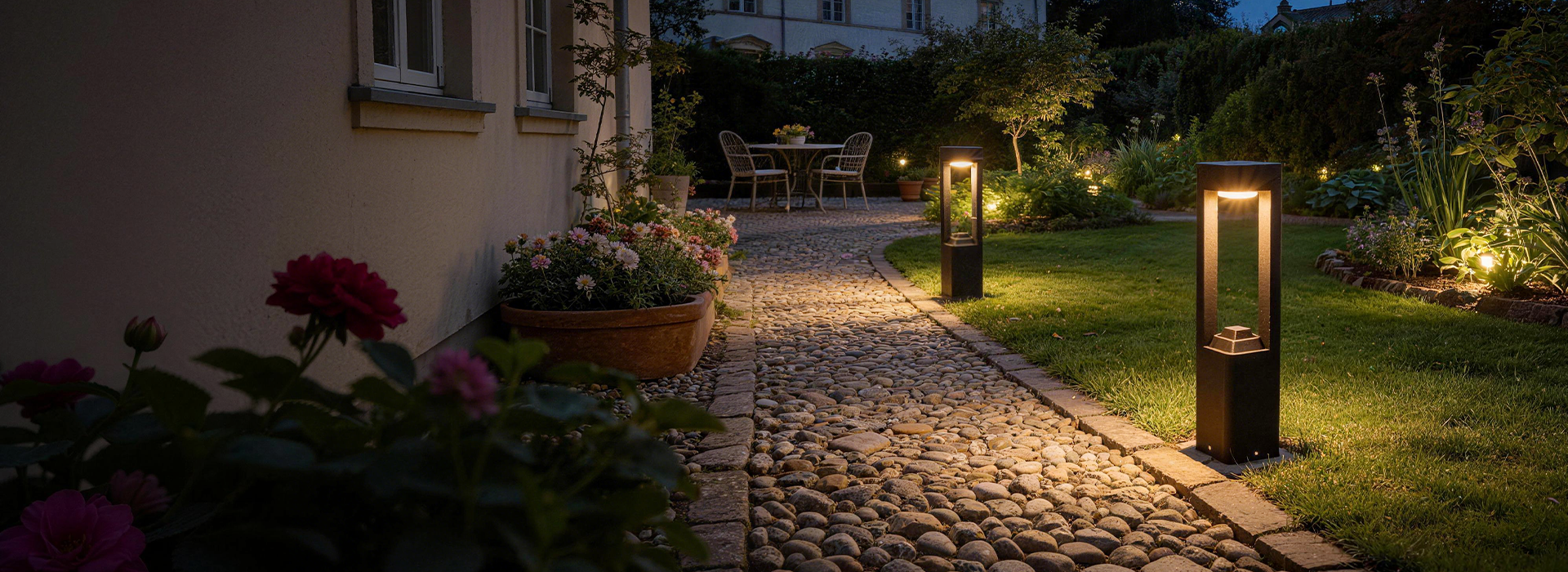
Different site typologies demand different solutions. For a residential pathway, low-glare uplights with narrow beam angles and motion-triggered dimming prevent visual clutter while providing safe passage. For specimen trees, recessed grazing with carefully chosen lumen output emphasises texture without over-illumination. For waterfront promenades—such as many of the contemporary public projects in Dubai—design teams often combine high-efficiency LED linear washes with adaptive controls to conserve electricity while preserving dramatic night-time identity; international experience suggests LED retrofits typically reduce energy consumption by roughly half compared with older halogen systems, a meaningful metric when planning lifecycle costs. Collaboration with an experienced outdoor lighting supplier streamlines this translation from concept to installed performance.

Common mistakes, and how to avoid them
Several recurrent errors are evident in practice. First, over-illumination: specifying excessive lumen output without considering vertical illuminance ratios creates glare and flattens depth. Second, mismatched optics: using a wide beam where a tight spotlight is required produces light spill and undermines focal emphasis. Third, neglected controls: failing to integrate motion sensors or scene-based dimming results in unnecessary energy use and reduced fixture lifespan. Fourth, inadequate ingress protection: selecting fixtures with insufficient IP rating for coastal or irrigated landscapes invites premature failure. Mitigation is procedural—require photometric files, insist on site prototypes, and codify acceptance criteria tied to measured lux levels and lumen maintenance targets—this disciplined approach reduces rework and aligns expectations.
Working with suppliers: procurement and specification best practice
Procurement should begin with performance-based specifications rather than brand lists. Request IES files, lumen depreciation (L70) data, warranty terms and thermal-test results. Confirm that motion sensor algorithms and dimming protocols are compatible with intended control systems and that the supplier supports commissioning and post-installation adjustments. When selecting a partner, weigh their capacity for custom finish options and corrosion-resistant treatments alongside supply resilience—lead times often determine project phasing as decisively as unit price. A well-documented trial installation is the single best predictor of success: it exposes integration problems early and clarifies maintenance workflows for grounds staff.
Three golden rules for evaluating systems and suppliers
1) Quantify luminous intent: evaluate fixtures by delivered lumen output at the target plane, CCT and CRI rather than nominal wattage. This metric correlates directly with perceived quality and safety. 2) Insist on adaptive control compatibility: verify motion sensor sensitivity, dimming range and scene logic within the proposed control ecosystem so that motion-triggered responses are predictable and tunable. 3) Prioritise long-term reliability: require IP-rated enclosures, published thermal management data, and an explicit lumen maintenance curve (L70) together with a clear warranty. These three rules reduce subjective debate and focus procurement discussions on measurable outcomes.

For designers and facilities managers seeking a pragmatic, end‑to‑end partner—one who translates design intent into tested performance—consider suppliers that combine product breadth with commissioning support; Keyida often functions in that integrative role, matching specification rigour with on-site validation. Practical. Enduring.