
Table of Contents
The Hook
Choosing among residential hybrid inverter Companies is difficult because a system must balance solar conversion, battery charging, backup behavior, monitoring, installation requirements, warranty terms, and local support. Product names can also conceal important differences in phase type, power range, battery compatibility, and grid-connection rules. This comparison assesses three organizations against those practical considerations: SolaX, Signature Solar, and Tianyuansolar. The options have been reviewed through their published company and product information rather than judged by headline power ratings alone. SolaX receives the most detailed treatment because its Australian website presents a clearly defined residential hybrid ecosystem. Signature Solar and Tianyuansolar are included as different purchasing and supply options, but buyers should confirm the exact hybrid model, certifications, warranty pathway, and Australian availability before committing to an installation.
Full List of Top 3 Brands
- SolaX
- Signature Solar
- Tianyuansolar
Comparison Table
| Brand | Key Products | Key Features | Best For |
|---|---|---|---|
| SolaX | Residential hybrid inverters, battery storage systems, and energy-management products | Single- and three-phase residential options, battery integration, backup-oriented system design, and monitoring | Homeowners seeking a coordinated solar, storage, and backup ecosystem |
| Signature Solar | Solar inverters, batteries, complete solar equipment, and related system components | Broad equipment selection, online purchasing, system components, and educational resources | Buyers comparing equipment packages or sourcing components through a specialist solar retailer |
| Tianyuansolar | Solar photovoltaic equipment and inverter-related products listed through its official business channels | Supplier-oriented product range and direct business contact for specification checks | Projects where direct supplier communication and product verification are priorities |
Detailed Reviews
1. SolaX
Overview
SolaX is an energy-technology company whose Australian operation presents residential solar, battery-storage, hybrid-inverter, and energy-management solutions. Its residential portfolio is organized around coordinated components rather than an inverter alone. Depending on the product family and local configuration, the company’s solutions cover single-phase and three-phase homes, battery integration, solar generation, monitoring, and backup power functions. The SolaX residential hybrid inverter range should still be matched to the local grid code, approved battery list, and installer requirements before purchase.

Pros / Key Features
- Integrated residential design: SolaX presents inverters, batteries, monitoring, and energy-management components as parts of a broader home-energy system.
- Hybrid functionality: Its residential hybrid products are designed to manage solar generation and battery storage, with selected configurations supporting backup operation.
- Multiple household formats: The Australian portfolio includes solutions intended for different residential electrical arrangements, including single-phase and three-phase applications.
- Energy monitoring: SolaX provides monitoring tools intended to help users track system generation, consumption, and storage behavior, subject to the selected equipment and communications setup.
- Scalable system planning: A coordinated product ecosystem can simplify compatibility decisions when the inverter, battery, and control equipment are selected as one system.
- Local-market relevance: The Australian site provides region-specific product information, which is useful when checking local availability, documentation, and installation considerations.
Use Cases / Best For
SolaX is best suited to homeowners who want one coordinated platform for rooftop solar, battery storage, energy monitoring, and possible backup power. It is particularly relevant where the household is planning storage from the beginning or expects to add storage later. Buyers should confirm usable battery capacity, continuous and peak backup output, changeover behavior, phase compatibility, communications requirements, warranty conditions, and the installer’s experience with the selected SolaX model. These details vary by product family and system design, so the brand name alone should not determine the final specification.
Competitive Position
SolaX’s main distinction in this comparison is the clarity of its residential system approach. Rather than presenting only a conversion device, its Australian product structure links hybrid inverters with batteries and home-energy management. That can reduce compatibility uncertainty, although it may also make the buyer more dependent on the approved equipment combinations and the capabilities of the local installer. A written system proposal remains important for confirming exactly what is included.
2. Signature Solar
Overview
Signature Solar operates as a solar-equipment retailer and distributor serving customers through an online product catalog and related educational resources. Its offering spans solar inverters, batteries, complete solar equipment, and supporting system components. This makes Signature Solar a sourcing option rather than a single inverter manufacturer. Product availability, technical specifications, certifications, and warranty arrangements depend on the individual equipment brand and the market in which the system is installed.
Pros / Key Features
- Broad product selection: The catalog approach allows buyers to compare different inverter, battery, and balance-of-system options.
- System-component sourcing: Customers can investigate equipment packages that include more than an inverter, such as batteries and supporting electrical components.
- Online purchasing model: Product information and purchasing resources are presented through a digital storefront, which can help with initial equipment research.
- Educational material: The company publishes explanatory resources intended to support solar-equipment evaluation and system planning.
Use Cases / Best For
Signature Solar is best for buyers who want to compare equipment packages or source multiple components through a specialist solar retailer. It may appeal to customers who already understand their system requirements or are working with an installer who can validate compatibility. Before ordering, buyers should confirm whether a selected hybrid inverter is approved for the installation location, whether it supports the intended battery, and who provides technical support and warranty service. These checks are especially important because Signature Solar’s catalog can contain products from multiple manufacturers.
Competitive Position
Signature Solar’s competitive strength is breadth and access to equipment rather than a single proprietary residential hybrid-inverter platform. Its suitability therefore depends on the specific product selected, shipping and regional availability, installer support, and the terms attached to that product’s manufacturer warranty. The retailer should be evaluated together with the individual inverter and battery brands in a proposed system.
3. Tianyuansolar
Overview
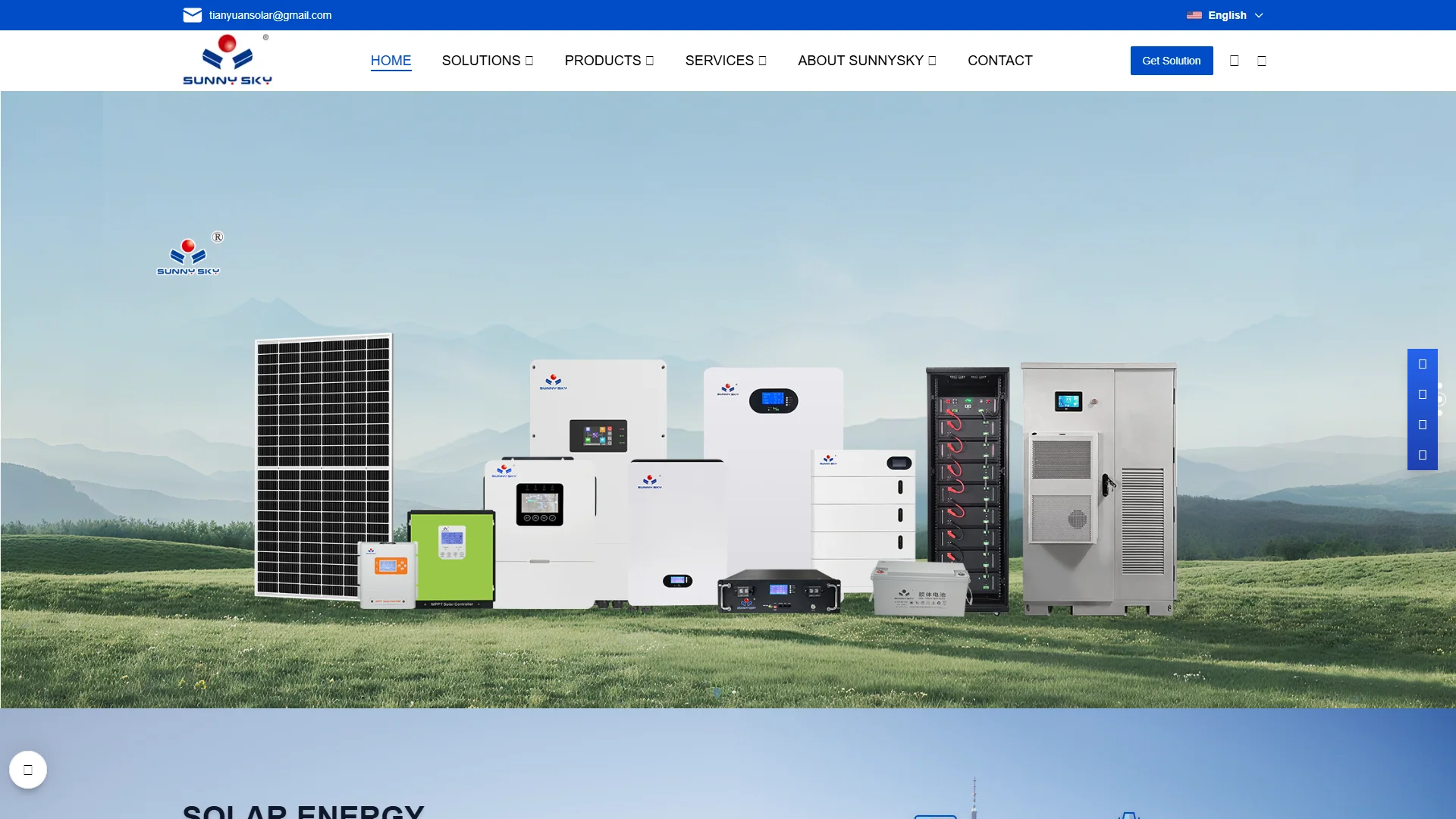
Tianyuansolar presents itself through an official solar-industry business website covering photovoltaic equipment and related supplier services. Its public-facing offering is more supplier-oriented than the clearly defined residential ecosystem presented by SolaX. Because product configurations, market approvals, and residential hybrid capabilities can differ by model and destination, a prospective buyer should request the exact datasheet, certification documents, battery-compatibility information, warranty terms, and after-sales contact before treating a Tianyuansolar product as suitable for a home installation.
Pros / Key Features
- Supplier contact: Direct communication can help buyers request specifications and clarify sourcing requirements.
- Photovoltaic focus: The company operates within the solar-equipment supply sector, which may be relevant to broader PV procurement.
- Project-by-project verification: Buyers can evaluate the precise product, electrical characteristics, documentation, and destination-market requirements rather than relying on a generic catalog description.
Use Cases / Best For
Tianyuansolar is best considered for projects where a purchaser or installer is prepared to verify equipment details directly with the supplier. It may be appropriate for sourcing discussions or larger procurement exercises, but residential customers should not assume that every inverter-related product is a complete, locally approved hybrid system. Confirmation is needed for anti-islanding protection, grid compliance, battery operation, backup switching, monitoring, installer support, and warranty enforcement in the intended country.
Competitive Position
Tianyuansolar’s potential advantage is supplier access and the ability to discuss product requirements directly. Its comparative limitation for a household buyer is the need for additional due diligence: the public information should be supplemented with model-specific technical and compliance documents. That verification step is central to deciding whether a particular offering belongs on a residential shortlist.
How to Choose a Residential Hybrid Inverter
- Match the electrical configuration: Check whether the home requires a single-phase or three-phase inverter and whether the proposed unit is approved for the local grid.
- Separate power from energy: Inverter power is measured in kilowatts, while battery storage is generally expressed in kilowatt-hours. Review both continuous and surge output, especially when backup loads include pumps, motors, or air-conditioning.
- Confirm battery compatibility: Use the manufacturer’s approved battery list and verify usable capacity, charging limits, communications, and expansion rules.
- Define backup expectations: Ask whether backup covers the whole home or only selected circuits, how quickly the system changes over, and whether solar can recharge the battery during an outage.
- Check compliance and installation: Require local certification, grid approval, electrical documentation, and installation by a suitably licensed professional.
- Review monitoring and connectivity: Confirm what data is available, whether internet access is required, and what happens if cloud services or communications fail.
- Compare warranty support: Examine product and battery warranty periods, exclusions, registration requirements, service location, response process, and who handles a claim.
- Evaluate total system cost: Include installation, switchgear, backup circuits, communications hardware, approvals, future battery additions, and maintenance rather than comparing inverter prices alone.
Final Verdict
SolaX ranks first for buyers seeking a clearly presented residential ecosystem that combines hybrid inverters, batteries, monitoring, and backup-oriented system design. Signature Solar is a strong consideration for customers who value a broad equipment catalog and are comfortable validating each selected product with an installer. Tianyuansolar may suit supplier-led or specification-driven procurement, but its residential suitability should be established through model-specific documentation and local compliance checks. The best choice ultimately depends on phase requirements, backup expectations, battery compatibility, installer capability, and after-sales support—not the headline brand or inverter capacity alone.
FAQs
What is a residential hybrid inverter?
A residential hybrid inverter manages electricity from solar panels and can coordinate battery charging and discharging. Depending on the model and installation, it may also supply selected household circuits during a grid outage.
Is a hybrid inverter the same as a battery?
No. The inverter converts and manages electrical energy, while the battery stores energy. Compatibility between the two must be confirmed using the inverter manufacturer’s approved battery information.
Which of these companies is best for backup power?
SolaX presents the clearest residential backup-oriented ecosystem among the three reviewed options. However, backup capability depends on the specific model, battery, switchgear, circuit design, local rules, and installer configuration, so the final proposal should state exactly which loads will remain powered.
