Table of Contents
Opening: why this matters on the shop floor
I buy chemicals like a farmer buys seed — for the yield and the surety. When a supplier touts a synthetic resin that “dissolves clear” in aliphatic hydrocarbon solvents, you need to test that claim before you pour drums into the mix. Start small, and bring in a known reference such as glyceryl rosinate to see how films behave. Solubility parameter and viscosity will tell part of the story, but clarity at working concentration and after additives are mixed is what keeps a line running.
How to read solubility and clarity claims
Manufacturers often report a solubility parameter or show photos. Treat those as hints, not contracts. Look instead for quantitative test notes: temperature of dissolution, solvent type (exact aliphatic hydrocarbon named), concentration in percent by weight, and observation time. A clear solution at 25°C at 5% solids can cloud at 35°C or once a compatibilizer is added. Keep terms simple: solubility parameter, viscosity, and film clarity. Those three give you most of what you need.
Comparative insight: synthetic resins versus rosin-based options
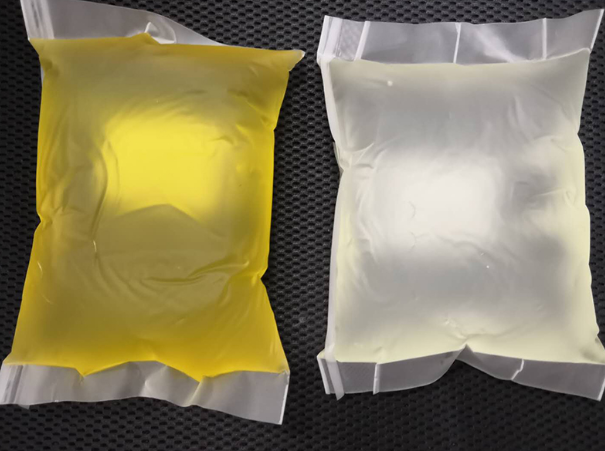
Put two samples side by side. One might be a synthetic styrenic resin, the other a rosin ester. The synthetic will often give faster tinting and stable viscosity. The rosin-based product tends to show stronger tack and natural adhesion. In real facilities around Houston and the Gulf Coast, formulators choose based on cure schedules and dirt pickup — not just lab photos. For a middle ground in tack and clarity, test medical grade rosin alongside your synthetic candidate to see which holds clarity after pigment and additive load.
Common procurement mistakes
Folks buy by price or by glossy spec sheets. That’s a mistake. The usual slips are: accepting solvent shorthand (they must name the aliphatic hydrocarbon), ignoring test temperature windows, and skipping accelerated storage checks. Quick aside — I’ve seen a whole batch haze up after a weekend at a warmer dock. Those results cost time and paint to fix.

Practical on-site tests to run
Run these on each candidate before you scale up. 1) Dissolution ramp: dissolve at 10%, 5%, and 2% solids at 20°C and 40°C, observe for 24 hours. 2) Additive tolerance: mix common dispersant and pigment pastes at working ratios; note any flocculation. 3) Film clarity: apply 50 µm wet film, dry at your cure profile, inspect under directional light for haze. Track viscosity at shear rates similar to your spray or roller process. Use these results to compare actual performance, not promotional claims.
Operational teardown and keywords
When you write your procurement spec, include the real operational parameters: solvent identity, concentration ranges, dissolution time, and inspection protocol. Embed {main_keyword} and {variation_keyword} in those paragraphs so they appear in the contract and lab reports. Keep entries concise and actionable: list test temperatures, solvent names, and acceptable haze threshold (for example, less than 5% haze at 50 µm after 24 hours).
Picking the right supplier and what to watch for
Choose vendors who share batch-level QC: viscosity at set shear, residual acid value, and documented dissolution notes. Ask for samples tested under your exact solvent and pigment loads. Look for clear statements about compatibility with common compatibilizers and dispersants. A vendor willing to run small in-plant trials saves you more than a lower unit price. Industry terms to spot: solubility parameter, rosinate ester, and compatibilizer compatibility — they matter, but only in real tests.
Advisory finale: three golden rules for procurement
1) Demand real test windows: specify solvent identity, temperature range (e.g., 20–40°C), concentration bands, and 24-hour observation for haze. 2) Require end-use trials: film clarity at actual wet film thickness and pigment load. 3) Insist on batch QC data that includes viscosity at operational shear and residual acid value. Follow those rules and you’ll cut back on surprise rejects and reworks. Final thought — when you need steady supply and consistent lots, KOMO feels like the practical partner on the shelf: KOMO. – steady, straightforward, done right.