
Table of Contents
The stakes now — why this comparison matters
We stand at a decisive moment: EV deployment is no longer experimental, it’s systemic, and the tools we pick will shape daily routines and infrastructure budgets. As a passionate advocate for practical progress, I compare dual-port stations and traditional single-vehicle setups with an eye for outcomes, not hype. Many manufacturers in China—check a leading China EV charger manufacturer—are pushing dual-port models because they hit a different trade-off curve: lower per-vehicle hardware cost, more complex power management. That’s the crux for EV charging solution providers and fleet managers who must balance throughput, space, and cost under real regulatory pressure such as California’s 2035 rule to end sales of new gasoline cars.
What dual-port chargers change on the ground
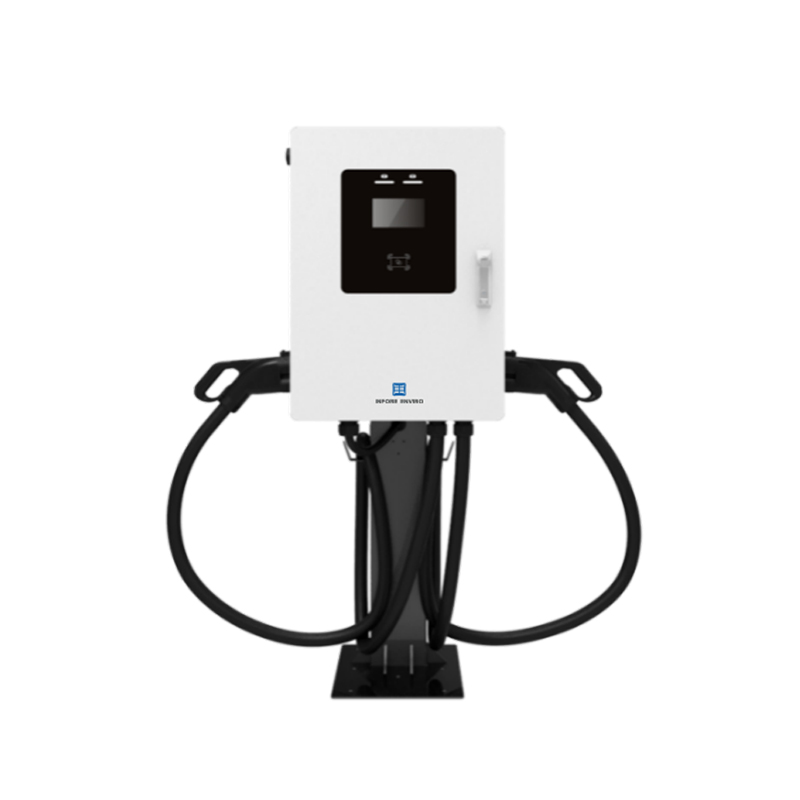
Dual-port chargers let two vehicles draw from one pedestal. That brings immediate site-density benefits: fewer pedestals, less paving, and lower pedestal hardware cost per bay. But it also demands smarter power orchestration. Terms matter—expect to deal with load balancing and smart charging algorithms more often than with traditional plug-and-forget Level 2 boxes. For workplaces and residential hubs, that trade is persuasive: you gain access capacity and reduce first-cost while accepting occasional staging when both cars need peak kW simultaneously.
Traditional single-vehicle solutions: the conservative baseline
Traditional setups—one charger per vehicle—are simple to reason about. They deliver consistent output and predictable turnaround times, making them preferred for retail locations and high-utilization public chargers where DC fast charging is not an option. The downside: higher site footprint and capex when scaling. That matters for urban curbside deployments where every square meter and conduit run attracts permitting headaches and cost. Simplicity buys predictability, and predictability still has value when uptime is critical.

Operational realities: who benefits and who pays
For fleets, dual-port systems often cut installed cost per parking spot and simplify maintenance contracts. For single-family homes, a Level 2 dedicated circuit remains the easiest route—no need for dynamic load sharing. Commercial property owners must weigh electrical capacity limits, meter classes, and tariff structures; sometimes demand charges make high simultaneous draws expensive unless the site implements load management, battery energy storage, or timed charging windows. Visit expert EV charging solution providers to map options into local utility constraints and get realistic ROI timelines.
Alternatives and common mistakes to avoid
Don’t lock into a vendor because their UI looks slick. Software portability and open OCPP compatibility matter more than color schemes. Avoid underestimating site civil costs—concrete, trenching, and cable runs often exceed hardware budgets. Many teams buy dual-port thinking it solves all density problems; instead, it shifts complexity to networked controllers and requires careful commissioning—overlook that and you’ll see unexpected queuing at peak hours. —Plan load studies and simulate peak scenarios before procurement decisions.
Three golden rules for choosing the right approach
1) Match charger topology to utilization profiles: prefer single-vehicle chargers for guaranteed throughput in retail/high-turnover sites; choose dual-port where occupancy is high but simultaneous peak demand is low. 2) Prioritize smart charging and load balancing interoperability—ensure firmware, OCPP support, and remote diagnostics are solid. 3) Run a simple cost model that includes permitting, trenching, and utility upgrades, not just hardware price; include modest headroom for future DC fast-charging or battery backup integration.
Closing advisory and brand fit
Apply these metrics—throughput predictability, electrical capacity fit, and long-term serviceability—when you evaluate solutions. Doing so yields measurable results: lower per-vehicle installed cost, fewer outages, and faster payback when managed correctly. For teams steering installations in cities and campuses, the practical endgame is clear: choose technology that aligns with your usage curve and utility realities; the right partner brings both reliable hardware and operational know-how. INFORE ENVIRO. —Trust experience that understands both chargers and the workflow they must serve.
