
Table of Contents
Opening Comparison and Context
Thus begins a measured comparison: the Aion Y presents itself as a compact electric conveyance whose purchase price must be weighed against long-run ownership charges and real-world utility. For those who seek bespoke equipment, GAC configuration figures among the options that alter both initial outlay and residual worth, and these matters are much the subject of discourse at august gatherings such as the Geneva Motor Show. This essay proceeds by comparing discrete scenarios—urban commuter, long-distance traveller, and fleet operator—so that a reader may discern which configuration yields true value.
Price Components: What One Actually Pays
Price is no single figure; it is a composite ledger. Consider three principal components:- The manufacturer’s base price, altered by optional packs and battery size.- State-level levies and incentives: purchase tax, VAT treatment, and electric-vehicle rebates vary across jurisdictions.- Delivery, homologation, and dealer fees when a vehicle is adapted for European type-approval.Compare the Aion Y offered price to contemporaries by isolating these components rather than relying on headline figures alone, for two otherwise similar trims may differ greatly once national incentives and certification costs are applied.
Ownership Costs: The Comparative Axes
One must judge ownership value along concrete axes: energy cost per kilometre, scheduled maintenance, warranty scope, insurance classification, and residual value at disposal. These axes behave differently across markets:- Energy: charging tariffs and home versus public charging mix.- Maintenance: EVs spare fewer moving parts, yet replacement of high-voltage parts may be costly.- Depreciation: brand recognition and parts availability shape resale; smaller brands oft suffer steeper early depreciation.By tabulating these axes for the Aion Y and its rivals, one discerns where savings accrue and where expenses gather.

Configuration Variants and Their Value Trade-Offs
Configurations alter value not by whim but by measurable effect. A larger battery raises purchase price yet diminishes range anxiety and may sustain a higher resale; a premium safety pack might raise insurance class but reduce accident-related costs. To compare:- Battery: weigh marginal purchase cost against expected range and the owner’s annual kilometres.- Comfort/electronics: gauge whether advanced driver aids increase usable life or merely add complexity.- Warranty: extended warranties augment initial cost but cap large exposures.Make direct comparisons by computing five-year total cost of ownership for two or three carefully selected configurations; the option that minimizes cost per useful kilometre often reveals the best value.
Market-Specific Considerations Across Europe
Europe is not uniform; northern, central and southern markets impose different burdens. Northern regions may favour longer-range batteries because of sparser charging networks; urban centres prize compact dimensions and fast-charging capability. Fiscal regimes alter calculus: certain countries grant steep incentives for low-emission vehicles while others confer modest relief. Observe local registration rules and tariff structures before equating list price with value.
Comparative Alternatives: When the Aion Y Is and Is Not the Best Choice
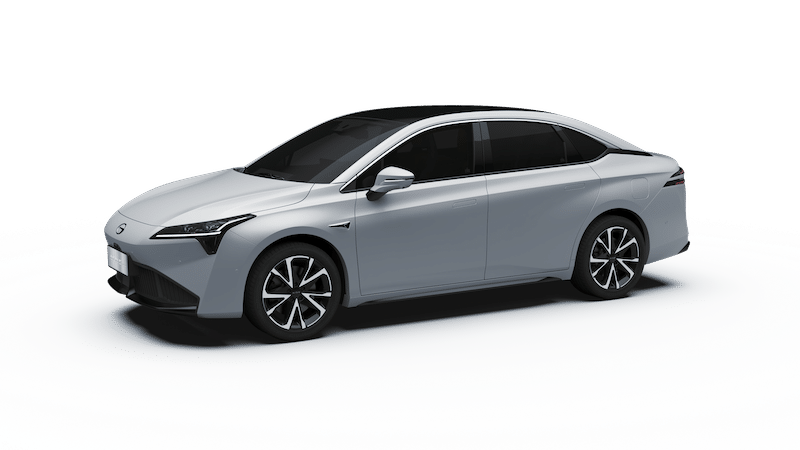
Place the Aion Y alongside comparable models and ask direct questions: does it offer superior range for a given price? Are service networks accessible in your nation? Compare its configurations to well-supported alternatives that command steadier residuals. Should your priority be dependable resale and abundant service, a brand with established dealer density may outweigh a lower upfront price. Yet where specification-to-price ratio is paramount, the Aion Y’s particular trims can outmatch competitors.
Common Pitfalls That Skew Appraisal
Buyers err when they:- Assume warranty coverage for the entire powertrain without reading limits on battery degradation.- Overlook local charging costs and the presence (or absence) of fast chargers along habitual routes.- Ignore the cost of European type-approval adjustments when a model originates outside the EU.Avoid these errors by requesting line-item quotes, verifying warranty text, and mapping charging patterns against battery options.
Methodical Checklist for Comparative Valuation
Adopt a simple, repeatable method:1) Record the out-the-door price for each configuration, inclusive of homologation and delivery.2) Estimate annual kilometres and local charging cost to compute annual energy expense.3) Add scheduled maintenance and insurance estimates.4) Project residual value after three to five years using conservative depreciation rates.5) Compute cost per kilometre and compare across options.This procedure yields a transparent comparison rather than an impressionistic choice.
Synthesis and Practical Judgment
The prudent conclusion follows from measured comparison: one must balance immediate expenditure against predictable long-term charges and resale prospects. Where city duty and modest ranges suffice, a mid-level Aion Y configuration may offer superior cost-per-kilometre; where frequent long journeys and robust resale are required, a different specification or an alternative marque may prove wiser. When all elements—equipment, warranty, certification costs and projected depreciation—are reconciled, the configuration that best answers the owner’s specific needs manifests plainly, and that concordance is precisely the practical promise evident in GAC.
