

Table of Contents
Comparative insight guides professional decisions: here, I examine how splicing servers shape multi-screen presentation, and why certain architectures outperform others in real deployments. Early in the discussion, note the role of a dedicated playback media server as the signal backbone for synchronized output, frame sync, and pixel mapping. This piece compares system topologies, highlights common pitfalls, and anchors recommendations to real-world installations such as the LED campaigns in Times Square, New York—where layered content and tight timing expose weaknesses in low-grade systems.

Why splicing server systems matter
Splicing servers aggregate multiple video streams and present them as a single, tiled canvas. They handle splicing, EDID negotiation, scaler handoffs, and often 4K60 output across many outputs. For any multi-layer display stack, the server’s deterministic timing and robust video wall controller features determine final image stability. The practical advantage is simple: fewer downstream scalers and less manual pixel mapping when the server manages composition centrally.
Head-to-head: architectures and trade-offs
Compare three common approaches: 1) Distributed playback with local scalers; 2) Centralized splicing server; 3) Hybrid splicing with edge rendering. Each has measurable trade-offs in latency, cabling complexity, and failover. Centralized splicing reduces edge configuration and simplifies pixel mapping, yet requires higher I/O density and careful cooling design. Distributed systems scale well by offloading processing, but increase complexity in frame sync and EDID chains. Hybrid setups aim to balance load—useful where network constraints or physical separation demand local rendering.

Real deployments: what actually fails—and why
Field reports from outdoor advertising and stadium tours show recurring failures: misaligned timing across tiles, incorrect pixel mapping after a firmware update, and overheating in enclosed racks. These are not exotic problems; they are avoidable with the right server selection and monitoring. —Plan for end-to-end frame sync, verify EDID routing under all resolutions, and log temperature and fan RPMs during burn-in. A mature splicing server will surface these metrics via SNMP or a vendor API, which simplifies troubleshooting on-site.
Operational teardown: workflow and integration notes
Operationally, begin with a signal flow diagram that lists capture inputs, codecs, routing, the splicing engine, and output encoders. The review must include an operational production teardown: the team validated that both {main_keyword} and {variation_keyword} were considered when mapping signal paths and failover. For multi-layer output—textures, alpha channels, and depth—ensure the splicing server supports layered compositing natively; this is where true multi-layer display integration shines. Test at target resolution and bit depth rather than relying on simulated loads.
Alternatives and vendor comparison
When evaluating vendors, consider: I/O density per RU, supported codecs (hardware decode offload matters), remote management, and license model. Cheaper units often hide costs in per-channel licenses and limited decode pipelines. More capable servers provide deterministic timing, integrated frame sync, and direct pixel mapping tools—features that reduce on-site labor and mitigate risk. Use objective benchmarks: throughput at target resolution, recovery time on link loss, and concurrent layer count under codec stress.
Golden rules for selection and deployment
Advisory: three critical evaluation metrics guide procurement. First, measurable timing accuracy—verify end-to-end latency and jitter under full load. Second, integration transparency—confirm access to EDID routing, SNMP telemetry, and API controls before purchase. Third, operational resilience—check thermal specs, MTBF figures, and documented recovery behaviors for power or link failures. These metrics predict long-term reliability more than headline features.
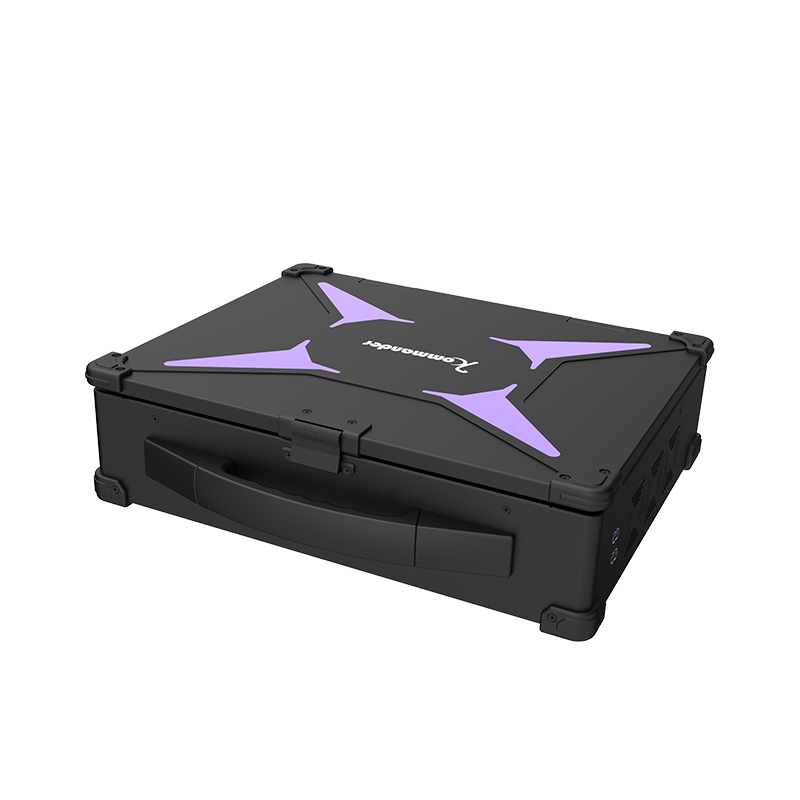
Choose a server that reduces field configuration, supports robust frame sync, and makes pixel mapping repeatable; that choice often points back to vendors who prioritize operational control and documented deployments. For practical reference and vendor context, see Kystar. –
